


Welcome to Fangirl Forward, a biweekly look at the people and ideas reshaping fandom, media and entertainment. Each edition bridges the worlds of fans and industry, exploring how community and creativity can shape what’s next.
In today’s edition, we’re exploring one of the most common entry points for fans hoping to work in entertainment: internships. Danielle Gould shares what she learned navigating that process herself, and how those lessons shaped her approach to helping other early-career creatives break in.
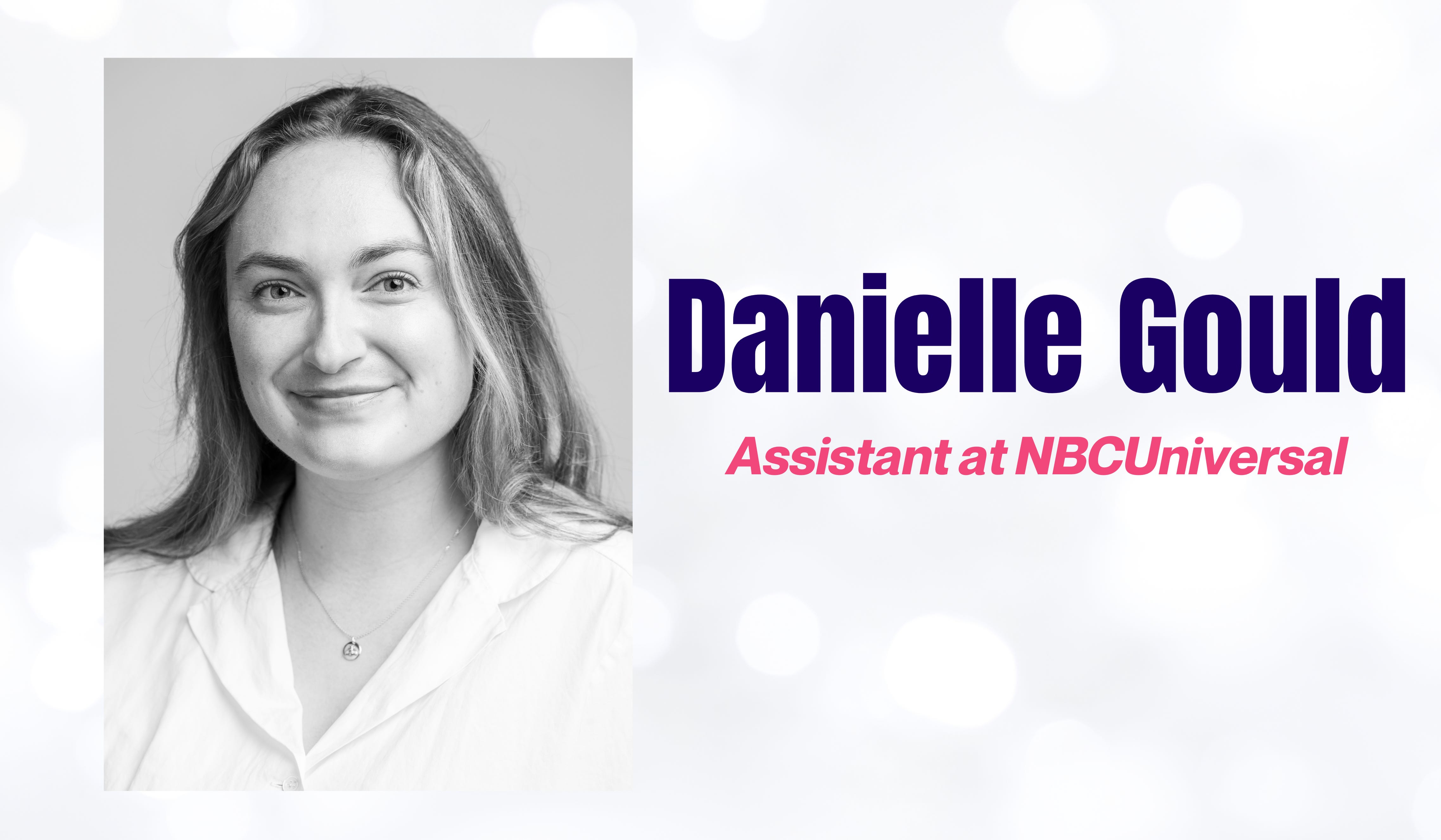
Breaking into the entertainment industry can feel overwhelming, especially when the path isn’t clearly laid out, you have no connections, and advice online is all over the place. Internship applications open and close on different timelines, expectations aren’t always spelled out, and many students are left wondering if they’re already behind.
Danielle Gould knows that feeling well. While a student at New York University, she landed internships at NEON, Broadway Video, Universal Pictures, and the Producers Guild of America. Now working as an assistant at NBCUniversal, Danielle launched Industry Interns, a resource designed to help students and early-career creatives navigate the confusing early steps of an entertainment career.
Below, Danielle shares the habits, tools, and mindset that helped her break in, including how she organized applications, approached networking realistically, and handled rejection early on.
You’ve landed several internships yourself and now run Industry Interns to help others do the same. What inspired you to start it, and what gap did you notice for students or early-career creatives trying to break into entertainment?
I was inspired to start Industry Interns after noticing the lack of industry preparedness in myself, my peers, and general discourse online. During my time at school, I had so many conversations with fellow students who felt lost or behind and didn’t know where to start. I think our classes at school focus on craft, history, or specific skills but lack the entry-level career readiness we need immediately after graduation. Where’s the class on agencies’ mailrooms or how to be a good assistant? I wanted to create a resource that could help fill out some of those gaps.
Entertainment internships open and close at different times, which can be confusing. What’s your advice for staying organized and spotting opportunities early, especially for students who don’t know where to start?
I love a spreadsheet! I had one throughout college with a tab for each internship semester. I’d write down the name of the internship, the company, key details, the deadline, when I submitted, and whether I got an interview, rejection, or was ghosted. It was helpful to stay organized and to look back and notice patterns from previous years to help better predict future timelines. Websites like Hollylist and Entertainment Careers were also really helpful.
The industry is built on connections, but not everyone has them starting off. For someone without family or school ties in entertainment, what are some realistic ways to build relationships without it feeling forced or intimidating?
The best way is to lean into the relationships you have with people who have SEEN you work. On their end, it’s much easier to vouch for you or recommend you if they can back it up with actual experience. I even mean if they’ve seen you work as a barista or in retail — ask those people if they know anyone in the spaces you want to be in. Professors and classmates are also a good place to start.
Truthfully, the generic 20 minute LinkedIn Zoom chat isn’t likely to blossom into a long mentorship. Those are good for learning and gaining information about specific roles, but harder to start a significant relationship with a stranger. Hence my emphasis on people you know!
Rejection is a big part of applying. How did you handle “no’s” early on, and what advice do you have for people who don’t get in this round but want to keep building toward their dream job?
I think my rejection numbers are somewhere in the three digits. Needless to say, it’s absolutely a part of the process, and everyone has been rejected far more times than not. While you can never really be sure, I used to think it was helping “get my name in the system.” It’s good practice to get used to the application portals and I tried to channel it into motivation to keep working toward my goal.
Whether it’s a fan account, student org, or creative project, many people already do the kind of work entertainment companies value, without realizing it. What’s your advice for showing that off professionally?
Any experience you have can be fair game for your resume. Think about ways to tailor it to entertainment using quantifiable data and strong verbs. If you have a lot of visuals or tangible projects, throw them into a website! There are great free options and templates out there and it can really elevate your presentation to employers.
✨ Wanna read more? Check out the full conversation with Danielle here.
The dialogue between fans and the industry keeps entertainment alive. Here’s a look at what fans are saying, what the industry is doing and why both matter.
Fan Talk
What fans are saying, questioning, and celebrating across pop culture – and what the industry should be paying attention to.
Conformity Gate showed how quickly fandom theories can harden into belief.
On January 7, Stranger Things fans flooded Netflix refreshing for an episode that didn’t exist, after a theory dubbed “Conformity Gate” took hold online. The idea was that hidden clues across the final season pointed to a surprise drop, and once TikTok got involved, the theory felt less like speculation and more like something that had to be true. The theory spread through TikTok repetition, AI-generated “proof,” screenshots, and alleged app changes. Fandoms are conditioned to look for meaning — through lore, Easter eggs, and years of being rewarded for paying attention. Add the emotional weight of a long-running show coming to an end, and it’s easy to see how “what if?” quietly turned into “of course.”
The issue wasn’t fans theorizing, that’s half the fun. It was the moment theorizing stopped feeling optional. When a theory becomes something you’re expected to believe, disappointment is almost guaranteed when the answer turns out to be no.
Hannah Montana–era nostalgia is building ahead of a milestone year.
With Miley Cyrus teasing something for Hannah Montana’s 20th anniversary, alongside High School Musical and Taylor Swift’s debut also hitting the same mark in 2026, fans are buzzing with anticipation.
A viral Broadway clip is reigniting the theatre etiquette debate. Footage of a man confronting fellow patrons during intermission of Mamma Mia! has gone viral, and most theatergoers seem firmly aligned on one thing: singing along at Broadway shows crosses a line. The response points to a broader post-pandemic tension around audience behavior, and a growing desire to protect live theater as a shared experience, not a personal one.
The Heated Rivalry fandom isn’t showing any signs of cooling down. Even weeks after the series finale dropped on Max, fan enthusiasm hasn’t slowed. Sidewalks packed with fans outside late-night shows, sold-out themed parties nationwide, and even growing curiosity around hockey culture have led many to compare the moment to early 2010s fandom peaks, like One Direction’s rise. It’s a visual example of how fandom momentum can escalate overnight, and spill far beyond the screen as fans breathe new life into a story through their own creations, events, and community.
It’s officially comeback season. Fans are being treated to big, buzzy returns as BTS announced the end of their hiatus with a new album and stadium tour, and Harry Styles is fueling speculation with a teaser video, website updates, and posters appearing worldwide. Even before releases land, fans are already in motion decoding clues, sharing sightings, and treating the buildup itself as part of the experience.
Industry Moves
From awards to new releases and announcements, these are the entertainment world’s biggest updates fans should know about.
Awards season is officially underway. Between the Critics Choice Awards and Golden Globes over the past couple weeks, the awards conversation is heating up fast. Next up: Oscars nominations drop on January 22. It’ll be interesting to see whether the early patterns hold… or if the Academy throws in a few surprises that shake things up.
Spotify is getting festival fans ready early. The Governors Ball Music Festival lineup is out, and instead of leaving fans to figure it out on their own, Spotify rolled out a new feature that helps listeners actually navigate the bill. It analyzes your listening history, shows where your taste overlaps with the lineup, assigns you a “festival persona,” and builds a playlist pairing artists you already love with emerging acts you’re likely to enjoy. It taps into the exact moment fans are already in — playlist-building, group chats, and pre-festival prep — and makes discovery feel exciting instead of overwhelming. Will be interesting to see if they continue this with additional Live Nation fests.
Broadway Week is back, making theater more accessible (for a limited time only). One of Broadway’s biggest ticket initiatives returns January 20–February 12, offering two-for-one tickets across dozens of shows, making it a great moment to finally grab seats or squeeze in more than one show without fully committing to full-price tickets.
More from Fangirl Forward
Recently published or currently relevant stories from our site.
FANFAQ: Unrivaled Is Back for Season 2. What Should Fans Know? — The player-founded women’s basketball league is bringing an expanded roster, new teams, and a growing spotlight into its second year. Read here.
Inside the Fan-Fueled Rollout of Marty Supreme — From surprise screenings to sold-out merch, Timothée Chalamet and A24 built a campaign that relied on fandom, and exposed the risks of doing so. Read here.
FANFAQ: What is a Parasocial Relationship? — “Parasocial” is everywhere, from TikTok debates to conversations surrounding how fans are participating in the “Heated Rivalry” crave. But the internet’s definition and the real psychological meaning don’t always line up. Read here.
Thanks for reading Fangirl Forward, your inside look at the cultural currents connecting fans and the entertainment industry. New editions publish every other Wednesday.
Our ecosystem goes beyond just this newsletter. We also publish essays, interviews and explainers that dig deeper into how audiences shape pop culture and how fans can become industry leaders across three core verticals:
From the Crowd – first-person fan perspectives
Forward Focus – cultural analysis and expert interviews
FANFAQ – a Q&A series demystifying the entertainment industry through fan curiosity
Fangirl Forward is part of Fan Fave Media, a creative studio amplifying emerging voices and entertainment storytelling through original content, live events, and creative strategy.
Want to collaborate, contribute or join our community? We love spotlighting the people and perspectives moving pop culture forward.
➡️ Follow @fanfavemedia on Instagram for more stories and event coverage