


On a random Saturday in December, for the first time in four years, “HS4 at midnight” actually feels… possible.
For years, it had been a running joke among fans anxiously awaiting the return of Harry Styles. The phrase always trended, but it never quite came true. This time, however, it didn’t feel like wishful thinking.
After largely disappearing from the public eye following the end of his last tour, Styles reemerged with a YouTube video titled Forever, Forever.
Filmed during the final Love on Tour stop in Italy in 2023, the eight-minute video didn’t open on him at all. Instead, the first three minutes were devoted entirely to the fans.
They were shown getting ready for the concert, dancing together, laughing, crying, and talking about what it meant to have tickets to the final show. Some mentioned knowing this might be the last time they’d see him onstage for a while, joking about how lucky they felt to have gotten tickets because he would “disappear” at the end of the era.
Disappear he did. But now, he was back.
The video ultimately revealed itself as the first teaser for a new era built explicitly around connection. As the camera pulled back into an overhead shot of the crowd at the end of the video, the words WE BELONG TOGETHER flashed across the screen in all caps.
It was a familiar kind of language for Styles. Each album seems to come with some sticky, affirming, mantra or phrase for fans to adopt, turn into memes or slap onto merch, like Harry’s House or Treat People With Kindness.
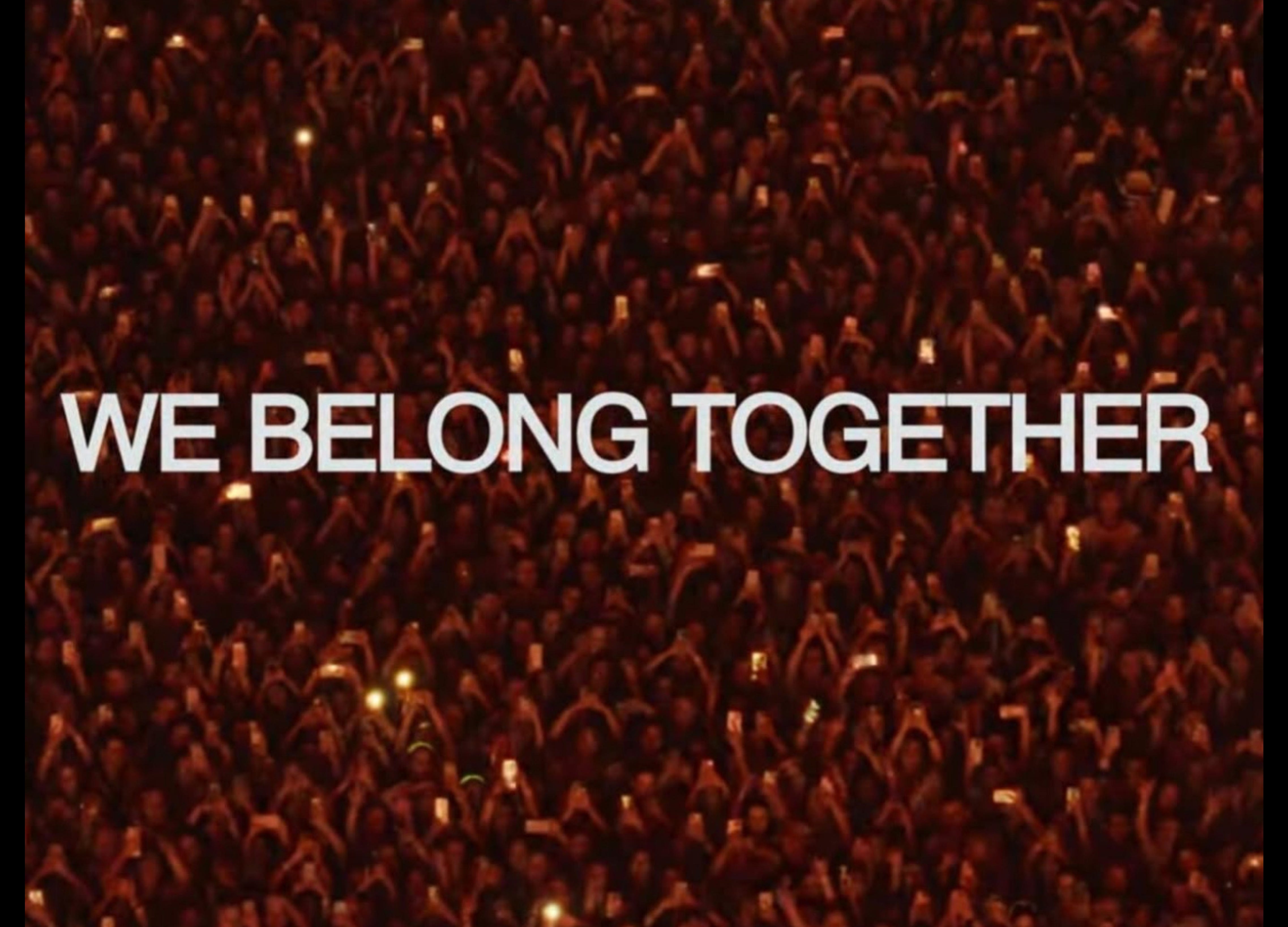
Suddenly, We Belong Together became the unofficial motto for the era — centering fans as part of the rollout. It appeared on posters across cities worldwide, on a new website, and as the opt-in code for fan text updates through HSHQ. Later, fans learned it was actually a lyric from the title track of the lead single off HS4, “Aperture.”
And when the album Kiss All the Time. Disco, Occasionally. was officially announced, fans knew what came next.
All that was left to wait for was the tour.
A Different Kind of Tour
When the tour details finally arrived, the excitement came with a small condition.
Instead of a traditional tour, Styles announced Together, Together — a series of global residencies. On the run, he’d play multiple nights in Amsterdam, London, São Paulo, Mexico City, New York City, Melbourne and Sydney.
Notably, the largest residency of the bunch is set for Madison Square Garden in New York City — the only 2026 tour dates in the U.S. for Styles, who will play 30 nights at the iconic venue.
The reaction was immediately split. After several years away from the road, many fans were excited about the possibility of seeing Styles live again only to be crushed by the fact that he would not be touring near them.
Still, many fans seemed to stay optimistic. Residencies, after all, are often framed as more stable and efficient due to fewer cities, fewer moving parts and less constant travel for the artist and crew. In theory, that structure can mean more predictable pricing and a smoother experience for everyone involved.
Thirty nights in one venue also felt, at least on paper, like a way to ease demand. For many fans, myself included, the expectation was that Styles’ comeback would involve stadiums. After all, his last tour sold at that scale. But 30 nights in the same location felt excessive enough that it had to function similarly. Surely there’d be enough room for everyone across that many days…right?
For a moment, it felt reasonable to believe that the residency might balance things out, and this era built on “togetherness” would translate into something attainable.
Then, the presale arrived.
The Reality Check
Within minutes of the presale opening, timelines filled with screenshots of queue numbers and seat maps. Hundreds of thousands of fans were waiting. When they finally got through, many were met with prices that sparked immediate outrage.
When I entered the queue for a Madison Square Garden date, a message informed me that ticket prices would range from $50 to $1,182, excluding VIP packages. The high end was jarring, but the low end felt manageable, enough to believe prices might be reasonably distributed.
They weren’t.
The cheapest pit tickets were $900. Lower bowl seats ranged from roughly $400 to $1100. Even some nosebleeds hovered around $300. While some cheaper options did exist, the majority seemed to be solely in these ranges, largely thanks to Ticketmaster’s Platinum pricing practice.

The backlash was immediate. Fans were frustrated, with some weighing whether this was a moment they could afford to miss, others calling for a boycott until prices went down, and another group even joking about researching job opportunities at the venue for a shot at getting in for free.
I remember thinking there was no way people would actually pay $1,000 for lower bowl seats. I certainly wanted that to be the case, not because I want to police anyone’s spending choices, but because I didn’t like the precedent that a “sell out” with these prices would set.
But the tickets still sold.
Buying Didn’t Mean Acceptance
Let’s be honest, most fans were not celebrating these prices, yet many still bought them. What played out during the presale wasn’t enthusiastic acceptance, but a sense of obligation based on dedication and passion.
Fans were negotiating with themselves in real time…thinking:
This might be my only chance. I’ve waited four years this. I don’t know when he will tour again. He’s my favorite artist. This is just the price of live music now.
In that context, buying a ticket doesn’t mean every single fan who did felt the price was fair. It means the alternative of missing the moment entirely felt much worse to those fans. Even so, those purchases still function as a signal that the prices are workable, whether or not they feel reasonable.
None of this is to suggest that fans who bought tickets were wrong to do so — especially considering some expressed guilt after the fact — only that affordability has quietly become the gatekeeper of fandom participation.
Amanda Iacona, a pop culture and fan engagement content creator, said what stood out to her most during day one of the presale was how many fans were either actively opting out or reluctantly buying out of fear.
“From what I saw on day one of the Harry Styles presale, there was noticeably more noise around waiting and opting out than actually purchasing,” she said. “A few fans I know did spend $1,000 on lower bowl or pit tickets — not because they felt great about the price, but because it gave them security that they’d at least get to go.”
And almost as quickly as tickets were purchased, fans began expressing regret.
Screenshots of checkout pages were followed by posts asking if it was “worth it.” Others publicly justified their purchases, explaining payment plans or once-in-a-lifetime logic, as if opting in required moral defense.
One fan wrote, “at the time I was like yay <3 and hours later it’s settling what I’ve done.”
Another commented, “i’ve not actually felt excited over seeing him again after so many years it’s more so like wow i just worked over 9 full shifts to afford the ticket.”
Unfortunately, urgency is baked into the ticketing onsale experience itself. Tickets feel scarce, and the pressure to “just grab something” before it’s gone, Iacona said, overrides hesitation or thoughtful spending.
After all, many of the tickets end up in the hands of scalpers who will flip the already expensive prices into an even higher bill. If you don’t buy the tickets now, they will certainly cost you more later.
At the same time, a significant portion of fans chose not to buy at all. Across timelines, people shared screenshots of seats they closed out of, queue numbers they abandoned, and posts explaining why they couldn’t justify the cost. Some shared that they chose to book vacations instead, accepting that this show simply wasn’t accessible to them.

Still, for the purchases that did go through, the outcome looks the same from the outside.
“When those purchases still go through, it unintentionally signals that these price points are acceptable—making it easier for artists and teams to keep raising them over time,” Iacona said.
The question, then, isn’t whether fans were willing to spend. It’s whether this is a system that should rely on pressure, guilt, and fear of missing out to function.
How High Prices Became Normal
The intense sense of urgency within the concert buying world is often reinforced by structural mechanisms that quietly soften the reality of the cost without actually lowering it.
For example, take installment options like Klarna or PayPal Pay in 4, which don’t make tickets cheaper, but make them feel more manageable. An $1000 ticket can become $250 in the moment, even though the total cost hasn’t changed and the financial impact still arrives later.
This is also where spending blindness creeps in. When everyone around you seems to be “making it work,” extreme prices stop looking like red flags and start looking average. In the midst of it all, fans can make dangerous financial decisions, and the set-up makes it easy to do so — a cautionary tale some fans tried to warn others about in the midst of the onsale craze.
“You guys… I promise you that if you max out credit cards and take out loans to see Harry, it will come back to bite you in the ass,” one fan wrote. “It happened to me in 2023 and 2024. I’m finally starting to recover. Even spending so much on a ticket will hurt.”
But that normalization happens fast. Instead of stopping to question if the prices are higher than we should be, we begin to be trained to feel like it’s just what prices are supposed to be these days, due to “the market” and “demand.”

And it’s true that concert prices have risen. Pollstar reported that the average cost to attend a show in 2024 was $135.92, and artists and teams are navigating a live music economy that is more expensive and complex than it was a decade ago.
Still, that context doesn’t explain everything. Just last September, Live Nation CEO Michael Rapino openly suggested that concert tickets have been “underpriced” for years. Framed that way, rising prices aren’t treated as a problem to be addressed, but as a correction.
It really makes me wonder, is there really no limit to how much fans are expected to absorb before participation itself becomes unsustainable? If both artists and fans are being asked to shoulder rising costs, where is the fair line of sacrifice supposed to fall?
Surprisingly, some of the pushback on pricing complaints surrounding Styles’ tour didn’t come from the industry. It came from other fans.
Comments like “What did you expect?” and “You’ve had years to save” reframed shock as a personal failure rather than an industry-wide issue. Many fans online tried spreading the sentiment that if you couldn’t afford it, you simply hadn’t planned well enough.
But this wasn’t One Night Only, and fans weren’t expecting $25 tickets. Concert tickets are expensive these days. But should a two-hour live music experience really cost a week’s paycheck? Fans were reacting to the extent of the prices and how quickly it has become normalized, and how often that normalization is enforced by the community itself.
When fans stop interrogating the numbers and instead defend them, even as they’re being most affected by them, it’s simply reinforcement of a situation that continues to push access further out of reach.
In moments like this, the question isn’t whether demand exists. It clearly does. Ticketmaster recently revealed a record-breaking 11.5 million fans signed up for the presale of Together, Together at Madison Square Garden. Everyone is clamoring to see Styles as he’s been away for some time, and on top of that, entire countries are all traveling to one city to do so. The market market doesn’t distinguish between who buys a ticket, only that someone does.
I remember the days of Love on Tour in 2021 and 2022. I was a student at NYU, and with the salary of an intern, I managed to see Styles six times over the years — five of which were at Madison Square Garden, including the very first Harryween shows.
I only paid over $150 for a ticket once during that entire era, and that was to be in the pit. During that tour, the fandom adopted a saying, “Money is fake, Harry Styles is forever.” Looking back now, it feels less like a joke and more like a warning.

I understand supply and demand, and inflation, and the fact that all of this was four years ago. But as an avid concertgoer, I must say, I have never seen prices this high for an arena show — especially one that requires minimal travel, minimal production movement, and plays the same venue for thirty nights.
The Geography of Belonging
Residencies are often framed as a win. There’s fewer logistics, fewer travel days, and a more controlled production. For artists and the hardworking teams behind them, residencies can ease financial and physical strain. For fans, however, the cost doesn’t disappear. It often grows.
Fans outside New York who want to see their favorite artist are now faced with the fact that to do so, they have to pay for flights and hotels, coordinate time off work, and face the added pressure of competing for access in a single city.
In that sense, the residency structure eases strain on the artist while amplifying it for fans, especially when ticket prices alone already stretch budgets.
Of course, high-priced residencies themselves aren’t unusual. They’re often positioned as limited, prestige events, staged in venues designed for long-term runs, and marketed clearly as destination experiences. Fans understand that tradeoff going in.
What makes Together, Together feel different is the context.
These shows are set at Madison Square Garden, a venue Styles has already played repeatedly on past tours at significantly lower price points. It’s not a residency-only space, but a standard touring arena where major artists regularly perform full tours at more accessible prices. At the same time, this run replaces what many fans expected to be a traditional comeback tour, following several years without touring and with no confirmation of when, or if, another tour will follow.
That combination matters. This isn’t an optional side project or a bonus run layered onto an existing tour. For many fans, it’s the only opportunity.
So when participation starts to depend not just on fandom, but on geography, flexibility, and financial reach, “togetherness” becomes something you qualify for rather than something you’re invited into. The language of inclusion remains, but the structure quickly narrows who can realistically take part.

Why This Felt Personal
I must say, I believe part of why this moment landed so hard has less to do with pricing models and more to do with how Harry Styles has always positioned himself in relation to his fans.
Styles is, in practice, distant. He isn’t active on social media. He doesn’t offer casual proximity or behind-the-scenes access. Outside of performances and press cycles, he’s largely absent — a boundary that makes sense given the way he entered the industry with One Direction.
But despite that distance, his work has always spoken the opposite language.
Since the beginning of his solo career, Styles’ branding has consistently emphasized warmth, safety, and shared space. It’s always been one of my biggest draws to his musical world. I remember being 17 and attending Live on Tour alone with my dad, and having strangers come up to me and compliment me on my outfit. It made me feel welcomed within the fandom despite me not knowing anyone there. Over the years, his shows have continued to carry the energy of being a safe space.
His concerts are famously conversational, built around moments where he speaks directly to the crowd, affirms them, and frames the room as a collective experience.
It’s a careful balance that he’s successfully managed, where he’s distant in practice, close in meaning. And for many fans, that balance has worked — because the shows are where the connection lives.
That emotional layer is easy to dismiss as parasocial overreach, but it’s also something Styles’ brand has actively cultivated.
When you don’t have casual access, and don’t expect interaction outside of the stage, the concert becomes the relationship. It’s where fans feel seen and where We Belong Together becomes tangible, even if the we is largely shared among the fans themselves.
Love on Tour was a community experience, and the Forever, Forever video that opened this era was a reminder of that world.

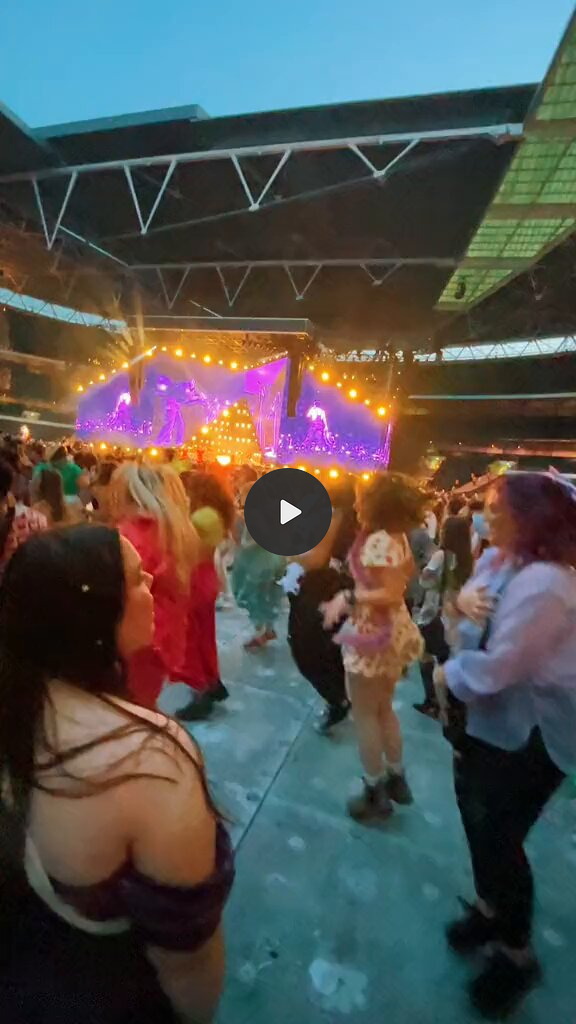
That’s why pricing doesn’t land as a neutral transaction here. When fans question pricing, they’re not rejecting the artist. They’re trying to reconcile the version of the relationship they were sold with the reality they’re experiencing. And to many fans, the feeling of being financially shut out by an artist who promotes belonging and centered celebrating fandom community as part of a marketing strategy can register as a kind of betrayal for fans who believed in that language.
In the end, this moment was never only about Harry Styles, or even about one particularly brutal presale. Its another case study on how live music is increasingly structured in a way that asks fans to absorb more cost, pressure and emotional risk, while offering less transparency and fewer real alternatives.
I don’t think this onsale felt like a breaking point for fans simply due to a shock at the idea that concerts cost money.
Fandom has always been about how much you’re willing to sacrifice to the things you love, and as a result, situations like this can start to feel like tests of devotion rather than an exciting opportunity.
When extreme prices are softened through payment plans, defended by “high demand,” and normalized within fandom spaces themselves, participation quickly shifts from something shared to something lightly gatekept. For an artist whose career has been built on language of belonging and collective experience, that shift is hard for fans to ignore, especially when the primary site of connection, the live show, becomes geographically limited and financially exclusionary.
Demand will always exist, and someone will always be willing to pay. But when fandom begins to require justification, guilt, and personal sacrifice simply to participate or feel like they belong, something fundamental has changed.
Live music as a shared cultural experience is starting to feel like it’s slipping away for fans of major pop artists. I really wish concerts didn’t feel like a luxury good now. If this is where things are headed, then the most important question isn’t how much fans are willing to pay, but how much they’re being asked to give up in order to feel like they’re a part of something.
The Forever, Forever video opens with fans before it ever shows the artist. That’s not accidental. But in the shared industry shaped by ticketing platforms, touring strategies, and branding decisions, moments like this force fans to question whether the systems shaping live music are truly being designed with them in mind.
Forward Focus is Fangirl Forward’s analysis vertical, featuring longform essays, interviews, and cultural reporting that examine how audiences shape entertainment—and how entertainment shapes us.
Great read!