


When tickets for Harry Styles’ 2026 residencies went on sale, many fans walked away confused and upset about the prices they saw. Across social media, two culprits kept coming up: dynamic pricing and Platinum tickets.

Those terms are often used interchangeably, but they’re not the same thing. And what you may have experienced isn’t always as simple as prices “going up.” The reality is more complicated, and that confusion is a big part of why ticket buying feels so frustrating right now. Here’s what to know.
What is dynamic pricing?
Dynamic pricing is a pricing strategy where the cost of tickets can change in response to demand. Many fans often use it as a catch-all term, but in practice, it can mean different things.
Traditionally, dynamic pricing refers to real-time, algorithmic pricing — where ticket prices automatically rise and fall during an onsale. For example, fans may expect tickets priced between $50 and $300, but as demand increases, the available prices appear closer to $99–$650 by the time they reach checkout.
Ticketmaster actively denies using real-time, algorithmic “surge pricing” in its onsales, meaning prices are not automatically raised minute-by-minute by a computer while fans are in line.
However, things can get confusing as many fans also use “dynamic pricing” to describe demand-based pricing systems where prices are set in advance using market data, seat location, and expected demand, then released in tiers.
While these prices may not technically change during the sale, they are still shaped by expectations of demand — which can make the experience feel “dynamic” from a fan’s perspective.
When this happens, the tickets involved are typically labeled as Platinum, or something similar.
What are Platinum tickets?
Platinum tickets are a separate ticket type. Unlike the concept of “dynamic pricing,” they are about what ticket is sold, not how the ticket is sold.
Platinum tickets are not dynamically priced in real time. According to Ticketmaster, they are priced in advance based on anticipated demand and seat location, using market data. Their prices remain fixed during the onsale, even though they may feel high or unexpected when you reach checkout.
“The goal is to give fans fair and safe access to the tickets, while enabling artists and other people involved in staging live events to price tickets closer to their true market value,” Ticketmaster says.
To put things simply, platinum tickets are expensive from the start, on purpose — though they do not typically offer any special perks, VIP access or added benefits.
In addition to Ticketmaster’s standard Platinum tickets, some tickets may be labeled differently while operating the same way.
For example, during Harry Styles’ AMEX presale, one fan purchased an AMEX “Preferred” ticket in section 107 for $765. Meanwhile, other fans reported buying similar lower-bowl seats for around $368 without the “Preferred” label.
It’s important to watch out for language like this, because, like Platinum tickets, Preferred also comes with no additional benefits. It’s simply recognition that the seat is an a great spot.
Why this still feels like “dynamic pricing”
Before many onsales, fans are told that ticket prices are set in advance and won’t change during the sale. That can be true, while still leaving out an important detail: cheaper tickets almost always sell out first.
By the time you get through the queue, the tickets left are mostly higher-priced platinum seats. As someone who sat through the Harry Styles queue with more than 60,000 people ahead of me, this was exactly my experience.
Even though prices technically didn’t change, what you encountered did. And when you only discover that after waiting in line, it can feel indistinguishable from dynamic pricing.
Pricing based on demand is, of course, not limited to the ticketing industry. The concept is similar to airline tickets or hotel rooms becoming more expensive based on availability, or ride-share prices increasing during periods of high traffic.
The key difference is how that demand is applied, as in, whether prices change in real time, or are set in advance based on expected interest.
This exact confusion played out during Oasis’s reunion tour in the UK last year. Fans thought Ticketmaster used dynamic pricing after tickets advertised around £150 appeared to cost more than £350 once they reached checkout.
The UK’s Competition and Markets Authority investigated. But ultimately, regulators said they found no evidence that prices were being adjusted in real time by an algorithm. Instead, they found that similar tickets were sold at very different prices through confusing tiered pricing, and that cheaper tickets sold first.
The result was an experience that felt like dynamic pricing, even though prices had technically been set in advance. Regulators ultimately said the main problem was a lack of clear, upfront information for fans.
As a result, Ticketmaster agreed to make changes in how it communicates ticket pricing to fans, including clearer disclosures when tiered pricing is in use and better explanations of what premium tickets actually do or don’t offer.
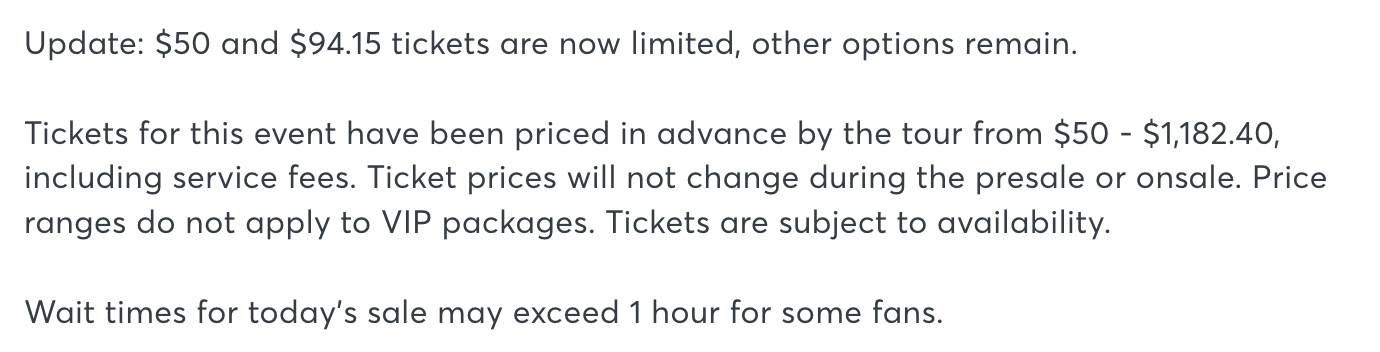
That same pattern helps explain why so many fans were confused during the Harry Styles onsale. Messaging that ticket prices were “set in advance," and would not change during the sale can be accurate, while still hiding the fact that many of the remaining tickets are higher-priced platinum seats.
For many fans, the listed price range was $50-$1,182. But by the time they reached checkout, the only tickets left were $1,000 seats in the lower bowl. Even if prices never moved, that outcome felt wildly out of sync with expectations.
Who decides how tickets are priced?
Artists and their teams approve the overall pricing strategy for a tour, including whether premium or tiered tickets like Platinum seats are offered.
As Ticketmaster told USA Today in 2022, following backlash over Bruce Springsteen’s tour prices:
"The promoters and artist representatives determine the specific pricing for their shows. The biggest factor that drives pricing is supply and demand. When there are far more people who want to attend an event than there are tickets available, prices go up."
These decisions are typically made before tickets go on sale. While artists may not set every individual price, pricing systems based on demand and seat value are not automatic, and their use varies from tour to tour.
Dynamic pricing and platinum tickets are not the same, however, both can lead to ticket prices that feel out of reach. One involves prices changing during an onsale, while the other starts prices high from the beginning.
Fans aren’t wrong to feel upset or misled, and like last year’s CMA investigation concluded, clearer, upfront transparency would go a long way toward making ticket buying feel less punishing for the people who care the most.
FANFAQ is a recurring column from Fangirl Forward that demystifies the entertainment industry for fans. Got something you’ve always wondered about? Send us your question here.