


The music industry loves to talk about fan community. It shows up in label pitches, in artist rollouts, in every panel about the future of the business. But knowing how to talk about fan communities and knowing what it actually feels like to be inside one are two very different things.
Victoria Hamersky knows the difference. She grew up a concert girlie, built her network camping outside venues, and joined Stan Twitter the same way everyone else did — she just ended up building a career out of it. Now, as the founder of VH MGMT Group and a former A&R at Elektra and Atlantic Records, she's one of the people in the room who actually lived it first.
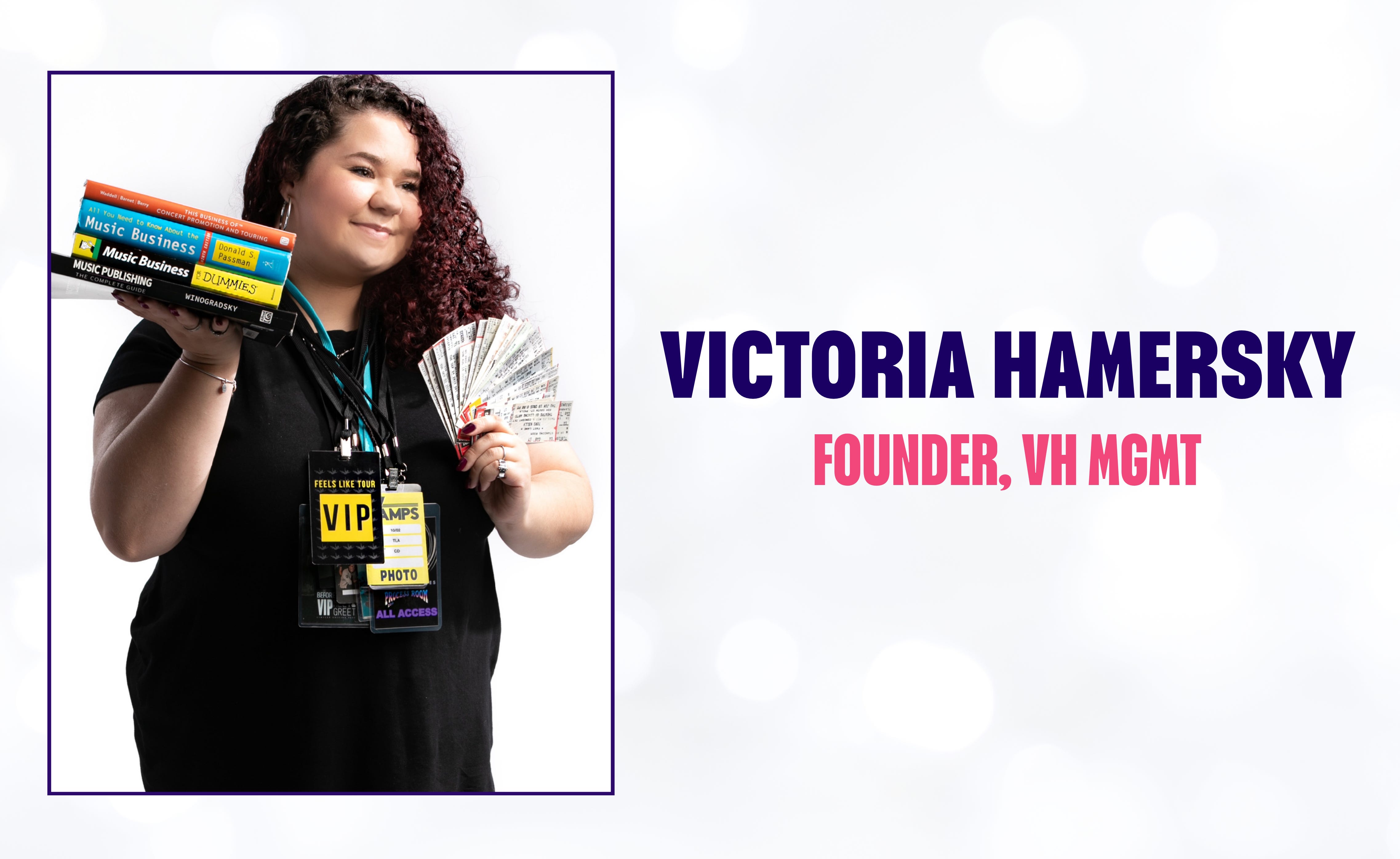
Below, she talks about wearing every hat until you don’t have to, why fangirls deserve a seat at every table, and the gaps the industry still isn’t closing fast enough.
You’ve worked across so many areas of the music industry — from VIP and touring to artist management and A&R. At the core of all of it, how do you define the role you play?
The overarching term would be music industry professional, because when you are an artist manager working for a developmental artist that’s not signed to a major or a huge label, you are playing literally every role — you’re the manager, you’re the agent, you’re the lawyer, you’re the graphic designer, you do everything. You have to be prepared for everything.
Getting to work outside of management and do A&R and touring, I’m meeting so many people that are growing my network, and that benefits my artists at the end of the day. Like, I DM’d a manager one day — “Hey, my artist is a huge fan of yours, I’d love for them to get coffee, if not, no worries.” A week later they were like, “Actually, do you want them to open my New York show?” Then Nashville got added. Then, “Do you want to open for the whole tour?” Say less. Mind you, I met that manager through working in concerts and touring.
You do have to wear all of the hats until those services are given to you by being signed to a label, or if your artist gets absorbed by a larger management company. But then also same thing, if your artist can afford to hire a publicist, I no longer have to be the publicist. But, I love it. It makes me who I am. Everything that I do always comes back to connecting my artists, and I feel like at the end of the day, getting to be in A&R, getting to see what a lot of these artists on the major system have gone through, or what the processes really look like for these internal conversations or deals — it makes me more aware and knowledgeable of how to protect my artists and my personal clients as well.
You started your management company at a young age. What made you feel ready, and do you have any advice for others looking to do the same?
I’ve been a concert girlie my whole life. Growing up in Philly, my family was always in Atlantic City, and in the early 2000s casino shows were what arena shows are now. I saw everyone — Beyoncé, Britney Spears, Jesse McCartney, Hillary Duff, the list goes on. I was so infatuated by that at a very young age. I was also so active in just entertainment in general as a kid, like I was even in Disney Channel commercial. I did a TV show, I was very involved.
I’m an only child, and I grew up with a lot of chronic illnesses I still have to this day, so the internet and social media became my safe place. I’m a Leo, I’m Italian, I loved making friends. I joined Stan Twitter, as one does, and I kind of built my entire music industry career through being on there, meeting other fans, and meeting other people.
Then I went to see One Direction and did not see any women working behind the scenes from what I saw, and I was like, I hate that. And then I was realizing, okay, sure, Stan Twitter, there’s a lot of lies on there, but the girlies were so right. One Directions management team, they were preventing them from doing a lot of things — telling them who to be, what to wear, turning Niall’s mic off. I internalized it and it was kind of my catalyst, I don’t want an artist to ever experience that. Being a chronically ill girly, music is absolutely my medicine and therapy, so I thought, how can I make a career in music where not only is it sustainable for me, but I’m also able to find a way to help someone through it? That was being an artist manager.
When I was 15, I started buying every music industry book I could find, learning as much as I could. I skipped prom to go to a concert, and was camping out on the street and meeting people in line. I was connecting with everyone at the concert venues that would speak to me. I was building a network before I really knew what that was. Now I’m turning 25 this summer, and a lot of those people I camped out with, we work together. It’s a beautiful thing.
The biggest advice I’d give if you know you want to work in music: music industry education should absolutely be your priority. No matter what field you end up in, being able to have knowledge of all the different facets you could potentially be involved in will not only benefit you, but it will benefit the artist you’re working for. That’s how you become a better asset.
You’ve said you were a fan first. How does that perspective shape the way you work with artists?
It’s 100% of who I am as a manager. My boss at Elektra and Atlantic is also a fangirl, and she wanted people like-minded like her on the team to help scout artists and see something she might not, because a lot of times when you're a higher position in A&R, you're focused on the artists you already have on the label. But when you have an assistant or a scout, I was solely responsible for making group chats, connecting artists, going on calls with their managers, getting demos, all of that. And the reason I even met her is because she emailed me wanting to connect with one of my artists when I was like 17, 18 years old. I was like, oh, I love this. It was so cool.
She said something recently that really stuck with me, “You were really passionate about this, and that’s why I wanted to listen to it.” And it just took me being overly passionate — like, I know I send you stuff every day, but there is something about this that is hitting so different. I can see the vision, I can see a fan base brewing quickly. Sometimes you can look at an artist on the rise and just automatically know it’s going to happen for them.
In high school and college, I ran an interview series on my blog called On the Rise, from when I was about 15 through 22, over 100 artists. I interviewed Chappell Roan, Noah Kahan, Gracie Abrams, Griff, Maisie Peters — all when no one really knew who they were. The ten-year overnight success theory is kind of a thing, and being a fangirl has given me an edge that a lot of managers I’ve worked with don’t have. They don’t have the understanding of fandom, or just what it’s like to be so immersed with an artist because they’ve built a world their fans feel warm and safe in.
There’s no music industry, no money, no job without the fans. You can’t sell out a show to zero people. If you’re not actively working towards helping that artist develop and understand their fan base, you’re not selling tickets, you’re not selling records, you’re not selling merch. Fangirls deserve a seat at the table because their opinions and ideas matter. That’s what’s different about me — that been there, done that experience.
Where do you still see gaps between what the industry says it values and what actually gets supported?
The industry has made great strides putting women in positions of power over the last 10, 15 years. They’re giving these opportunities. They’re getting a seat at the table. But the table might have a woman there and it’s still lacking people of color, still lacking the queer community, still lacking disabled voices. There’s a lot of work that needs to be done, and I say this about artists too, not just industry professionals.
A great example is Halsey. She has one of the diseases that I have, Ehlers-Danlos, and she’s still actively touring. But I’m not on her team. I always want to be a fly on the wall like, are the people around her supporting her? Making sure she has what she needs to be able to put her best foot forward, and access to good health care. Because a lot of artists signed to labels don’t have insurance, no access to mental health resources, no access to medical care, and they’re putting all this money into a project they still have to recoup. You have to buy your merch before you can sell it. Get a van, pay for gas — all before you can go play a show and make money from it.
I believe there’s a space for everyone in music, and what you look like, who you love, what you are in the world, what gender you are, does not matter. Music is 100% for everyone. I physically cannot fathom exclusion in the music industry when everything stems back to the exact people you’re excluding. Blues, Soul, rock and roll, jazz, Americana, folk — all of that stems from Black America. I’m the girl that’s like, oh, you like Elvis? Do you know his most famous song is actually from a Black queer woman who is basically the founder of rock and roll — Sister Rosetta Tharpe? All of these genres and cultures stem from people that you don’t want in your space, and that’s just like completely mind-boggling. That’s why I try to do the work that I do — making the music industry more inclusive for women, people of color, LGBTQ, and disabled persons, because we need these voices at the table just as much.
There are organizations doing incredible work — the Black Music Collective, Queer Capita, Grammy U. The work they’re doing is so needed. But it really does suck that these organizations even have to exist. There’s no organization that a white male music industry professional will ever need, it’s already in their favor. Unfortunately that's still the way corporate America operates, especially right now. But diversity, equity, inclusion — that doesn't just include the music industry, it includes the whole world, because we're all human, we're all people. Music should bring people together, not separate them.
What are you a fan of right now?
My dream job is to be the friend that alerts everyone about what’s happening in pop culture. Right now, I’m obsessed with The Pitt. I was a huge fan of ER growing up, so it’s a great segue, but also everyone’s hotter, which is crazy to think about. Something about The Pitt that I also resonate with Heated Rivalry is that they’re not completely unknown but a lot of these actors aren’t being handed opportunities on a silver platter, some of them were literally serving in restaurants less than a year ago. Things like that bring me so much joy. Anything is possible if you have the passion and the drive, and just make your dreams come true, you can do it.
I’m obviously still obsessed with One Direction, that’s just a given. I’ve been obsessed with Raye since 2019. I’ve been so lucky to kind of be a fan in the background to hear her story. Around COVID she was signed to EMI in the UK and they were completely blacklisting her from everything — shelving her music, blocking everything — and mind you, during that time she’s writing songs for Beyoncé and doing a lot of EDM and club tracks. She found a way to leave, and now she’s 100% independent. She put out a beautiful record a couple years ago. I saw her in Philly when they moved the show to a smaller venue because it “wasn’t sold out,” and you could barely walk through the door. It was overly packed. Now it’s 2026, I’m about to see her in Philly and Nashville, and the entire tour is sold out. Her album is number one across the charts. Her entire story, her message, everything is just so impactful to me. And this record is just full of hope. She’s such a testament to what hard work, faith, and determination can get you, despite all the people being against you. She was always talking about white male CEOs telling her what to do and who to be, and being able to take her freedom back and have an entirely sold-out US, UK, and EU tour — it’s just unfathomable and beautiful. And then her sisters are opening up for her, which I love them too. They’re fantastic artists: Absolutely and Amma.
Keep up with Victoria on Instagram here, and VH MGMT here.