


Before streaming, before social media, and before algorithmically generated playlists told you what to listen to next…there was radio.
Radio was where you first heard the song that changed everything. Where you called in to dedicate a song to someone. Where you found out your favorite artist was coming to town, or won concert tickets just by being the ninth caller.
For a lot of fans, radio has always been part of how fandom happens. And while the platforms have changed, the core dynamic hasn’t — fandom has always been built on connection, trust, and consistency.
Tracy Morgan is a syndicated radio personality, multi-Stellar Award winner, and the first woman inducted into the Spin Awards Hall of Fame. With millions of listeners tuning in daily across 40+ cities nationwide and a career spanning more than three decades, she’s built one of the most devoted audiences in radio.
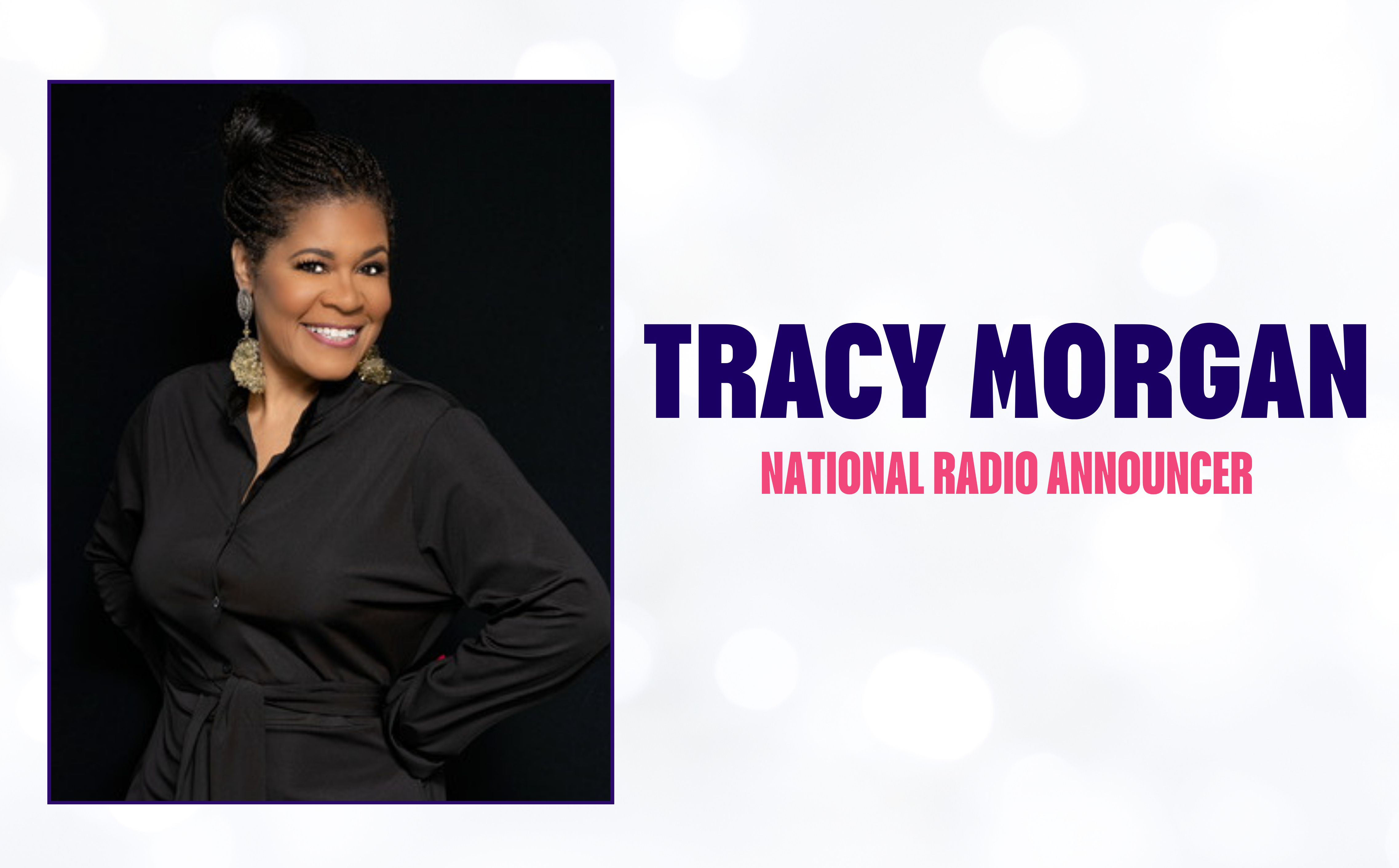
Below, she talks about the voices who inspired her, how radio and fandom have always been intertwined, the misconceptions fans have about how radio really works, and what it actually takes to turn a love of music into a career in broadcasting.
You knew you wanted to be in broadcasting from the time you were 13. Who were some of the voices you grew up listening to that made you fall in love with radio/television and how did they inspire you?
It actually started with television. My mom always had the news on while she was cooking, and one day I glanced up and saw Lark McCarthy on screen. I kept watching every time she came on, I didn't want to miss a single one of her broadcasts. That was the moment I said to myself, I'm going to be a television newscaster, and I started pursuing it from there. I eventually got to meet Lark McCarthy, which was such a full circle moment. Valerie Coleman in San Francisco was another one — I spent my summers in California as a little girl and watched her all the time. I got to meet her too, an I remember just how excited I was to be able to visit a television studio.
My passion for radio came a little later, when I met Candy Shannon. She was a popular radio announcer in Washington, DC on WKYS, and I met her at a taping for a show featuring female radio announcers. I only got to speak with her briefly after the show, but she invited me to come see the radio station — and the moment I walked in, I fell in love. She was so smooth on air. At one point I genuinely wanted to sound just like her. She would critique my tapes, and eventually I got the courage to submit my audition tape to stations in the DC area. I landed my first job as a board operator and worked my way to becoming an on-air talent from there.
What did it feel like to be on the other side of the mic for the first time, knowing you were now the voice someone else might be listening to?
It was very exciting, but I was very nervous at the same time. I was working as a board operator for a talk show when the host asked me to bring him back in after a commercial break. My very first words on air were "and now back to the Calvin W. Rolark Show." I had no idea in that moment just how much of my life would be defined by what came next.
Radio has always had a unique relationship with fans — requests, dedications, being the first place people hear a song that changes their life. How do you think about your role in that experience?
It's an incredible honor, and I never take it lightly. Every time I open that microphone, I'm aware that what I say has the power to make someone's day, or change it entirely. Music carries so much emotion, and I've always seen my role as someone who gets to be the bridge between the music and the listener. My goal is always to encourage and uplift, through both what I play and what I share. When you're someone's morning — when your voice is the first thing they hear — that means something. I try to honor that every single day.
You’ve built a listenership that tunes in every single day. What do you think
actually creates that kind of loyalty?
Being real. Authentic. People tune in because they feel like they know me — not as a radio personality on a pedestal, but as their sister, their girlfriend, their family. I never talk above my listeners. I always approach the mic like we’re sitting in my living room having a friendly conversation.
And that authenticity has created real relationships. I’ve answered my request lines throughout my career, and some of those callers became people I genuinely know and love. One became one of my dearest friends for over 25 years. And I have a beautiful goddaughter because her mom called in on the request line one day. That’s what radio can do when you show up as yourself.
Listeners often feel like they genuinely know the people they hear every morning. How do you think about that relationship, and the responsibility that comes with it?
That relationship is real. When people meet me in person, they don't have to worry about me being untouchable or too big to stop and talk. I'm going to have a conversation with you — that's just who I am. That’s not a hard thing to do. My responsibility is to always be kind, respectful, and present for my listeners. And honestly, it's not hard to do that when you remember that they have options. They chose to tune into you.
You’ve watched radio evolve through so many eras — before streaming, after streaming, social media, podcasts. How has the fan relationship with radio
changed?
Once streaming platforms and digital music took off, things changed pretty fast. Fans could discover music on their own, and they didn’t need to wait for radio to hear their favorite song. Radio is still the top platform for reaching an audience, but now fans can also stream and play songs on demand. That shifted things. Radio's role in music discovery became less about being the first to play something and more about being a trusted voice helping listeners make sense of what's out there. It's still one of the most powerful tools for breaking new music, but the relationship looks different now.
Now, with social media, listeners have the ability to engage directly with hosts, artists, and each other in real time. The relationship became more conversational and visible. Fans can respond instantly, shape discussions, and even influence programming trends through online feedback and data. What hasn't changed is that listeners still value connection and personality above everything else. I've just learned to meet them where they are.
Fans often have strong feelings about radio — why their favorite song isn’t getting played, how playlists are decided, who actually has control. What’s a common misconception you wish more listeners understood?
The biggest misconception is that playlists are built on personal taste. They're not. They’re shaped by a mix of audience research, streaming data, market trends, and industry relationships. I sit on a lot of music panels, and I'm constantly explaining to artists that getting a song added to a playlist isn't just about how good the song is. The real question programmers are always asking is: will this keep most listeners from changing the station? That's the filter everything goes through. It's a business decision as much as a creative one, and I think understanding that helps fans and artists alike manage their expectations around radio.
What do you wish someone had told you early on that you had to learn the hard way?
Consistency wins over everything else. Early on I thought it was about landing big breaks or sounding perfect on air. What I learned over time is that what actually builds trust with listeners is showing up every single day. Doing things like sounding natural, being prepared, doing the show prep. I didn’t need to focus on impressing the listeners, they wanted the real me. I'm grateful I got that advice relatively early in my career, because it saved me a lot of time chasing the wrong things.
For someone who grew up as a fan of music and wants to turn that
into a career in radio, what’s the first step?
Understand that radio is really about communication, not just music. A lot of people come in as music lovers and are surprised by how much of the job is about how you tell a story and how you connect with people. So start practicing that — whether it's college radio, a local station, a podcast, or even just recording yourself at home. Get comfortable with your voice and how you use it.
And listen to radio differently. Don’t just listen as a fan, listen like a student. Pay attention to the pacing, the transitions, the way a host carries a segment. There are so many moving parts to executing a good radio show that you don’t notice until you start looking for them. Find a mentor who can help you navigate the industry, because there’s a lot that can’t be learned from the outside looking in.
What are you a fan of right now? Do you have any pop culture recs?
I have really been getting into Broadway shows and stage plays a lot more recently. I saw Hell’s Kitchen, the Alicia Keys musical earlier this year, and that was great. MJ: The Musical and Moulin Rouge, I really loved those too. They all have incredible soundtracks, of course, but with Hell’s Kitchen and MJ in particular, I get really excited by stories that involve narratives of resilience and growth in the music industry.
Want to keep up with Tracy? Follow her on Instagram here.