


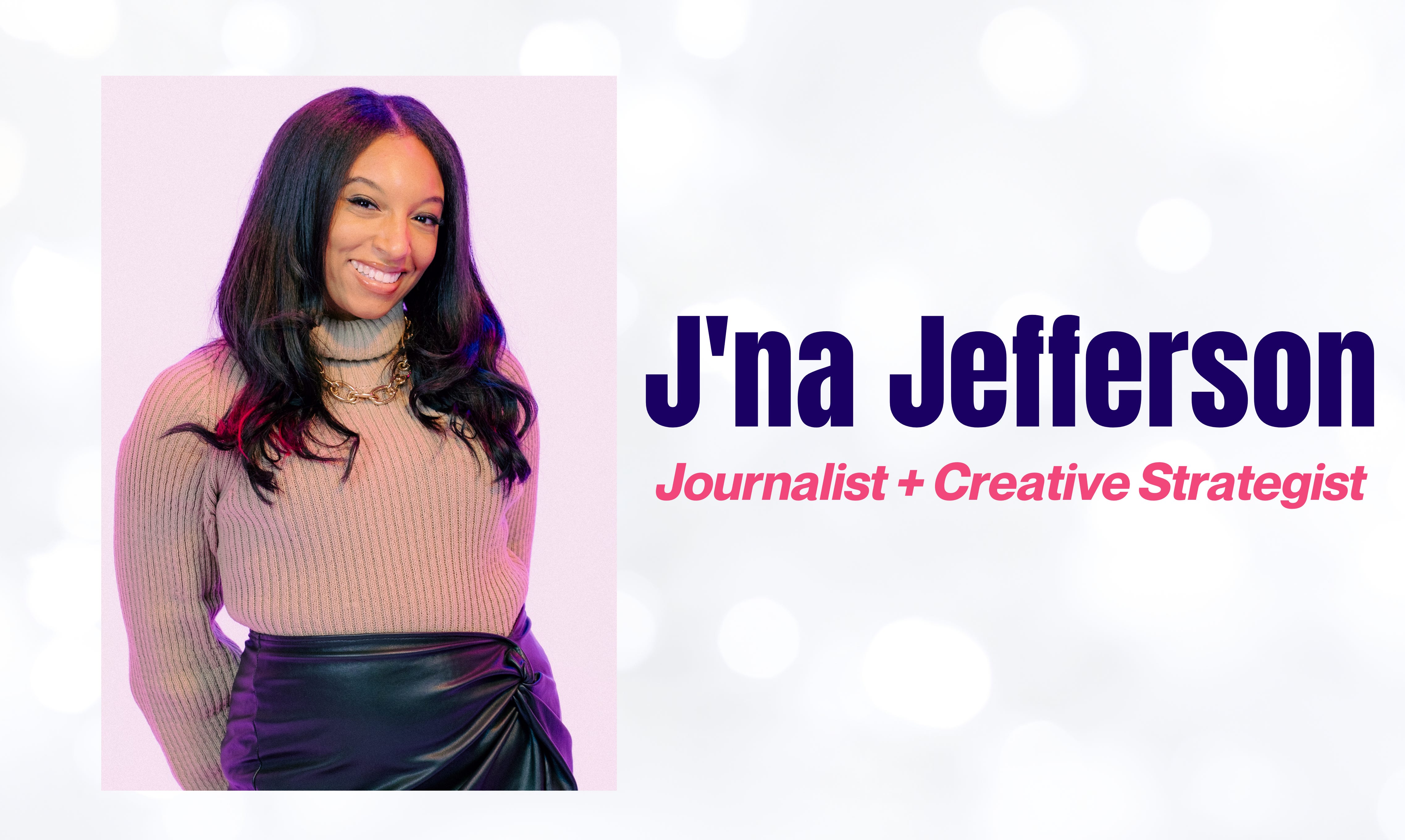
In an era where fandom is increasingly visible across media — from viral red carpet clips to personality-driven interviews — the expectations placed on music journalists are shifting. Yes, there’s a high focus emphasis on virality and enthusiasm. But the craft does still matter.
With more than a decade in music journalism, J’na Jefferson has built her career balancing cultural awareness with a deep respect for the artists she covers. Her work has appeared in Rolling Stone, Billboard, USA Today, MTV, and Harper’s Bazaar, and she has interviewed artists ranging from Ciara and Sting to Doechii and Tate McRae. Her reporting frequently situates music within larger conversations about race, gender, and identity. She has covered red carpets, contributed commentary to BBC platforms, and taught music reporting to students at the Craig Newmark Graduate School of Journalism.
Described as a “professional fan,” Jefferson sees no contradiction between loving music deeply and reporting on it seriously. For her, admiration is a starting point, not a substitute for discipline.
Below, she reflects on interviewing artists she admires, navigating gossip and virality culture, tracking cultural trends, and why keeping the craft first continues to define her work.
You’ve been described as a “professional fan” before. When you hear that, what does it mean to you, and do you think there’s any misconceptions about that?
I love being a professional fan because, above all, what I care about is music. I love being able to call myself a journalist, and I love the doors journalism has opened. But before any of that, I was someone who just loved music.
I don’t think I’ve ever run into misconceptions, but there’s definitely a time and place to flaunt excitement. Of course, not everyone is that deep in the weeds. So it’s about peppering in bits of information about the things I’ve learned and the things I know when I can in certain settings, but for the most part, just letting people learn on their own and putting them on if they ask. I guess the misconception would be that everyone who has a very strong interest in something could always be perceived as “holier than thou” when it comes to their interests. So definitely knowing when and where to flaunt it would probably be one of the things that we have to learn as people who are in our profession.
When you’re interviewing artists you genuinely admire, what helps you stay present and intentional in the moment?
I just have to tell myself, this is just a regular person with a cool job. I’ve been telling myself that since I first started.
I started at Vibe magazine, and my first big kid interview was 10 years ago this month, in 2016, with JoJo. I remember thinking, okay, this is going to be cool. Who doesn’t love JoJo? She’s such an inspiration. But she is just a regular person with a cool job. From that moment on, I was like, I will probably never feel starstruck again, because I know what I have to do. After all is said and done, I can be like, okay, I did it. But in the moment, you just talk to them like a normal person.
How would you say deep familiarity with an artist’s work and their world changes the kinds of questions you’re able to ask compared to someone coming in with less context?
I think it really all comes down to the research. I could have an interest in somebody, and then when I get deep in the weeds, realize I know a little bit more than I knew previously. And that can open up another group of questions that I might already have. Now that I know a little bit more, it's like, okay, this can lead me into other questions that I might be able to lead with or segue into.
I feel like a lot of people who may not have the acumen to be interviewing people with in-depth care and analysis might ask very surface-level questions. But I think that people who have a genuine interest in something, rather than someone who is just like, “I want to interview this person because they’re this person,” it opens up a very large portal to being like, okay, there are so many things that can be asked instead of just, “What inspired you for this?”
I encourage everyone who wants to go deeper with their interviewing skills or their journalism skills to really immerse themselves in an artist’s work. Go deeper than that. If there’s a question that you’re like, okay, I want to ask it, Google it. Has this question been asked before? If you can’t find it, I think that gives you pretty good leverage to really go deeper with these questions and just see how far you can take it — of course being really cognizant of certain topics or conversations or moments in their career and in their life that they might not want to tap into.
There’s often an expectation in music journalism to “dig deep” and get something revealing, especially in a landscape where fans feel very connected to artists. How do you balance respect for artists with the responsibility to still push for honesty and insight?
I think it’s because I know what kind of journalist I am, and I know what kind of journalist I’ve built myself up to be. Don’t get me wrong, I do love gossip. I’m trying to get better about being the one who gets it rather than being the one who puts it out. I don’t want to be the one who puts it out.
For instance, say you’re interviewing someone like Harry Styles. Liam Payne passed away almost a year and a half ago now, and that was a big topic among One Direction fans. So I think if I were to ask a question about Liam, I would have to be very, very careful about being like, “Oh, Harry Styles talks about Liam,” as opposed to being like, maybe he had a comment on it. I think people want to get the scoop. They want to be the first. But when it comes to certain topics, I wouldn’t be in a rush to ask about certain things, because when he goes on his press tour, he’s not going to answer questions about what’s going on with One Direction. He’s going to answer questions about his music.
Same thing with Ciara. I interviewed Ciara a couple of months ago, and I had seen a tweet where someone was just like, “See, this is actual journalism. You guys probably would have asked her about being a WAG.” And it’s like, that’s the last thing I think about when I think about Ciara, because she has this huge, long career. She just had an album that came out. She has all these songs coming out. Let’s focus on what’s actually happening.
You just have to recognize what is going to be worth it in the end. And you also want to make sure that your guest feels comfortable, because this is their whole career. They don’t want to talk about the things that are making headlines if it’s something that has nothing to do with the work that they’ve worked so hard to perfect and strengthen and grow and mold.
So I think that would probably be my advice: focus on the craft, and everything else — just leave that to the people who want that tea.
We’ve been seeing more virality-driven moments on red carpets—people chasing a clip, or letting personal fandom take over. What do you think professionalism should look like in those spaces, and what do these changes reveal about the culture right now?
I totally understand the changing landscape, because obviously if you have a following and brands are converting to TikTok, social media, television — these quick hits — they’re going to want someone who has personality.
Not a lot of people who are trained in journalism are going to be willing to be on TikTok or television. That’s just not what we were trained to do. So I understand the push for people who are a little bit more, I guess, palatable — people who already have a following and have people who are interested in what they have to say. But that does not translate into the actual craft of journalism. It takes time. There are people who fall into it and they're good at it, but then you see people who’ve practiced and studied — they are journalists down. You can tell the difference in the questions. They're a little bit more thorough. They're more thoughtful.
Seeing levels of unprofessionalism from certain influencers who have this kind of access does strike a sour chord, because there are people who do this really well and aren’t being given the chance.
I think it was last year or two years ago — there was a red carpet reporter interviewing Megan Thee Stallion and she said, “Every time I hear your music, I just want to beat someone up and fight.” Megan’s whole brand is empowerment, strength, sexuality, being proud of the skin you’re in. She’s never had a song about wanting to beat women up and fight, especially as an abuse victim. That’s the kind of nuance that’s not being captured that makes it all the more obvious. And that’s why a push for having real journalists back in these spaces is imperative.
We’re in a time where a lot of things get misconstrued. Someone can say one thing and it can start a complete firestorm. So being able to recognize nuance and remembering that we are literally on the carpet to do our job — of course it’s a fun job, but it’s still a job — matters.
That’s also what being a professional fangirl is about. I wouldn’t say I get starstruck, but there is a certain level of respect I have for every person I’ve interviewed. I’m not going to say, “Can I take a picture with you?” Unless I cannot pass up this opportunity. But that is after I do the interview, I'm like, okay, I've interviewed this person. They have a little time left in their schedule. Can we take a cute pic? And that's it.
I’m not going to ask them to sign something. For me, the souvenir is the fact that I got to interview someone whose work has touched me and other people. That’s my souvenir. I don’t need a memento. My memento is the work I’ve produced. The fluttery feeling in my heart that I’m still doing something I really like to do. That I got to speak to Ciara. I got to speak to Chance the Rapper. Like there are these people who I'm like, I've been looking up to for so long. I love what they do. I respect their craft, and I can speak to them. That’s enough for me.
You’ve interviewed artists at different stages of their careers. What practices or habits keep you plugged into trends in a way that helps you recognize when an artist, sound, or moment is on the verge of breaking?
I think just being such a consumer of music for all of this time, I’ve seen how things ebb and flow.
Right now, the Y2K trend is really big. Someone told me a long time ago, every 20 years, it all comes back around. So we’re in that moment now. 2006 was 20 years ago. I wouldn’t be surprised if some sort of snap sound came back — not “lean wit it, rock wit it,” but that kind of vibe bubbling back up. The need for nostalgia is so strong.
At the same time, we’re getting people trying to reinvent their own wheel, taking what they’ve done and amplifying it. This is why I really wish MTV and VH1 were still a thing. The pop culture education has kind of been wiped out, but there are so many moments where someone does something and I’m like, that’s a direct callback to this. A couple years ago at the VMAs, Tate McRae wore this very lacy number, and I was like, that’s Britney Spears at the VMAs. And people were like, what? And I’m like, everything old is new again.
If we keep that mindset — that everything is a reinvention of the wheel — it helps you figure out what trends are going on.
The last two or three years, pop is having its moment. I think R&B has always had a moment, but people overlook it because it’s not as energetic as pop or not as bold as hip-hop. It’s always just been in its lane. Hip-hop is going to fall back and then come back again. I just don’t think it’s right now. I also think people are yearning for what feels real. What’s going on in the country doesn’t always reflect what hip-hop is trying to promote — money, cars, all of that — and that’s not necessarily what people are soaking in right now. So things are going to change again. There’s going to be a lot of breaking down and building back up.
History definitely kind of repeats itself.
You also write about music in the context of race, gender, sexuality, and identity. How does paying attention to those bigger cultural conversations shape the way you report and tell stories?
I think before anything, obviously, I am a Black woman. We are taught from a very, very young age, this is you, this is the world. You might not get everything that you want, but that doesn’t mean you stop being who you are.
My mom was very big on making sure my sister and I were deep in our communities and educated about what’s going on in the world — and what’s going on in our own communities, whether that’s within our demographic, people our age, within our race and our background.
So I don’t know what other way I would write if I wasn’t writing about what’s actually happening.
When I first started in journalism — and I’ve grown a lot — I definitely just wanted to talk to the cool people. I was like, I want to talk to this person because they’re big. I want to talk to that person because they’re trending. But I think it was honestly the election of 2016 that made me recognize I could do more with the gift I have as a writer, and with my experiences growing up, to make a difference.
I don’t want it to just be, “Oh, I wrote this thing.” I want it to be, I wrote this because I felt this. I wrote this because I heard this song and it made me think about the larger picture that’s going on.
From there, that changed how I approach writing about everything. I don’t think I can write about just any old thing. I really have to think about the intricacies of the music, the culture, the societal implications. There are so many layers that need to be explored, because music is really a snapshot of the times that we’re living in.
So when Harry Styles came out with “As It Was,” why did he write that? When Kehlani came out with “Folded,” what did we need? Why did she do that? What is that signaling? What conversation is that opening up?
It’s important to contextualize all of it, because music contextualizes so much for us. And if I can help one person contextualize the thing they love in a way that’s approachable, understandable, easy to decipher, but still keeps my voice and my opinion intact — that makes me feel good, because I can help one person today by thinking about the thing I can’t stop thinking about, which is music.
You’ve taught music reporting and mentored early-career journalists. What’s one misconception you see people have about professionalism — especially when they come into the field with a lot of passion for their beat?
I feel like people think music journalism, in the larger scope of journalism, isn’t as serious. Especially since I’ve been searching for a new full-time job for the longest, I think people are just like, “Oh, she’s a music journalist,” and that’s just it. Like it’s fluffy and fun. But there’s actually a lot that goes into doing what we do.
It’s the same journalism. I didn’t go to school for music journalism — I went to school for hard news journalism. Then I found that my particular beat was music and culture. And instead of just being like, “This song’s good, this song’s bad,” it’s a lot more rigorous than I think people expect.
When I first started teaching, some students — not all — thought it would be an easy A. And I’m like, actually, no. I’m going to have you guys working.
I had them go to events. They lived in the city, so it was easier. I told them, go on Bandsintown, find a cheap or free show, go review it. Reach out to publicists. Try to get a quote or an interview. And I think they were like, whoa. I thought we were just going to listen to music the whole time. But no — you’re learning everything.
My first internship at Vibe magazine was literally just, “Alright, you’re on assignment. Here you go.” So I had to learn a lot on the job. I’m taking what I learned without being taught and teaching people so they don’t have to be in that same circumstance. But it’s definitely a lot more work than people give it credit for. And it opens up a lot. It starts as a beat, and then it can snowball into so many other things. I’ve worked in tech. I’ve worked in higher education. I’ve worked at a streaming network. I’ve worked at a hard news organization.
Music journalism is far more impactful and serious than I think a lot of people want to say.
What are you a fan of right now? Any music, pop culture, or artists you’re loving or recommending?
I like Zara Larsson a lot. She’s such a star. I first heard her in 2016 with “Never Forget You,” and I’m glad she’s having a renaissance right now. I’ve been going to the gym a lot, so I’ve been in my female empowerment baddies era — Victoria Monét, Megan Thee Stallion. They make me want to go harder for myself and just be the best version of who I am.
I just listened to Monaleo for the first time — she’s a female rapper, she’s pretty good. Sault just came out with a new project. They’re like a funk/jazz, mysterious group, super cool. I really like Jacob Banks. UK musicians have been taking me there lately — I’ve been listening to Sasha Keable a lot.
Bruno Mars is coming out with his album, so I’m mentally preparing. I got tickets to the tour, and Raye is the featured guest, so I’m really excited. Also Alemeda, she’s pop-rock and angsty. Very cool vibes.
I’m no stranger to a nostalgic moment either. I’ve been listening to a lot of early 2000s music. One of my favorite bands ever is Gnarls Barkley, and I’ve been listening to them a ton.
Podcast-wise, I’ve been trying to listen to things that make me feel like I’m growing. I’ve been listening to Mess — it’s two comedian friends talking, and it’s really fun. I’ve also been listening to Fresh Air with Terry Gross. A friend compared me to her after watching one of my interviews, and I was like, maybe I should start listening. I’ve really been enjoying it. Another one I like is She’s So Lucky. It’s entrepreneurs talking about how they got where they are. I’m like, this is where I need to be.
I’ve also been doing more reading and audiobooks. I just started Buy Yourself the Damn Flowers. It’s one of those books that reminds you that you are that girl. Don’t let anyone dim your light. It’s easy to get wrapped up in comparison, but we're not seeing the full story. It’s a very, very helpful book.
Explore more of J’na’s work: She’s interviewed artists like Doechii, Ayra Starr and Tate McRae, and written cultural deep-dives for MTV, Billboard, and Miami New Times. You can browse her portfolio here and Substack here.
This interview has been lightly edited for clarity and length.