


Welcome to The Monthly, Fangirl Forward’s flagship edition. Each issue features one person doing something genuinely interesting at the intersection of fandom and the entertainment industry, a pulse check on what’s moving fan culture right now, and the people, ideas, and experiences helping push fandom forward.
Music festival season is fully ramping up, but as most fans know, the hype starts long before the actual festival weekend. From lineup speculations to outfit planning to discovering new artists and navigating overlapping set times — the festival experience is extremely communal, with nonstop updates, and the industry is finding new ways to engage fans throughout that process.
This spring, Lollapalooza played into the artist prediction excitement, turning its lineup reveal into a week-long scavenger hunt, dropping cryptic clues and bone-conduction lollipops that played artist clips only the person holding them could hear. Meanwhile, Spotify partnered with festivals like Governors Ball and Austin City Limits on a personalized in-app experience that assigned fans a custom "Festival Persona" based on their listening history, building a playlist that pairs artists they already love with emerging acts they're likely to enjoy.
These activations are part of a growing recognition that the festival experience extends far beyond the weekend itself — something Kaitlyn McKnight understood long before it became a trend.
In 2022, she was hired to run a Discord community for Lollapalooza. It was a two-week sponsorship activation tied to a Discord-sponsored stage at the festival. Fans got access to a lounge, chatted online for a couple of weeks, met each other in person during the festival weekend, and that was supposed to be it. Except nobody left, so it kept expanding.
Festiverse is now Live Nation's official music festival fan engagement platform spanning more than 20 festivals, including Governors Ball, Bonnaroo, Austin City Limits, and Lollapalooza. It’s an app, an always-on community, and a content engine that keeps festival fans engaged year-round, from lineup speculation season all the way through the encore.
I spoke with Kaitlyn McKnight, Director of Community Management at Live Nation, about how festival fans connect, why the community kept going when it was never supposed to, and how she’s kept it feeling genuinely fan-run even as the platform has grown.
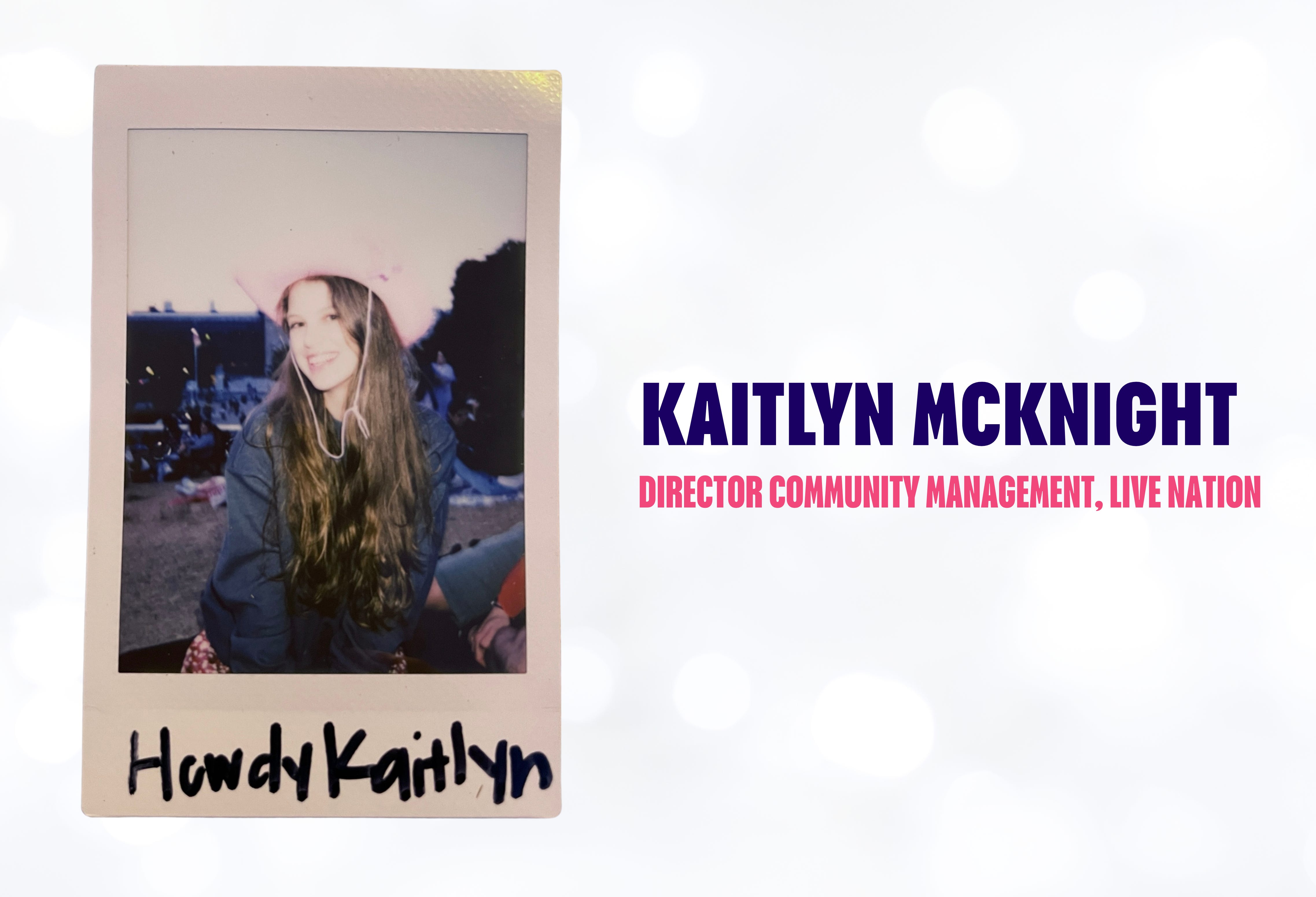
It wasn’t supposed to last. McKnight was brought in to manage the Discord community for two weeks, and when Lollapalooza ended, the community was supposed to go quiet with it. Instead, fans who had spent two weeks chatting online and then finally met each other in person at the festival lounge just kept talking.
“Everyone was just still chatting and so excited,” McKnight recalls. “They were like, what show are you going to next?” So she kept it going, slowly adding more festivals until it became something none of them had planned for. “It was supposed to be a one-month fun thing,” she says. “And now we’re here almost four years later.”
What McKnight noticed early on was that festival fans are a distinct kind of community. They’re not there for one artist, they’re there for the experience of being somewhere together. That excitement of discovering the 1 p.m. act you hadn’t heard of yet, or eating from the same food vendor every year.
“Festival fans are open to everything,” she says. “They will listen to every new album that comes out. They love discovery. They long for that experience on-site and are very open to new artists and side quests while they’re there.”
That community is especially powerful for first-timers and solo attendees. McKnight built an "ask an expert" forum under each festival, where longtime attendees answer questions from people going for the first time. "You gotta remember your first time — everyone's nervous," she says. On site, Festiverse hosts daily meetups where McKnight greets every single person, connects them with other fans who want to see the same artists, and hands out free swag. The goal is to make sure nobody who shows up alone stays that way.
That appetite for connection doesn’t stop when the festival ends either. The Festiverse community speculates about lineups months before they drop, tracks tour announcements for clues, and debates which headliners are off the table because their routing doesn’t make sense. The festival weekend is just one of many focal points.
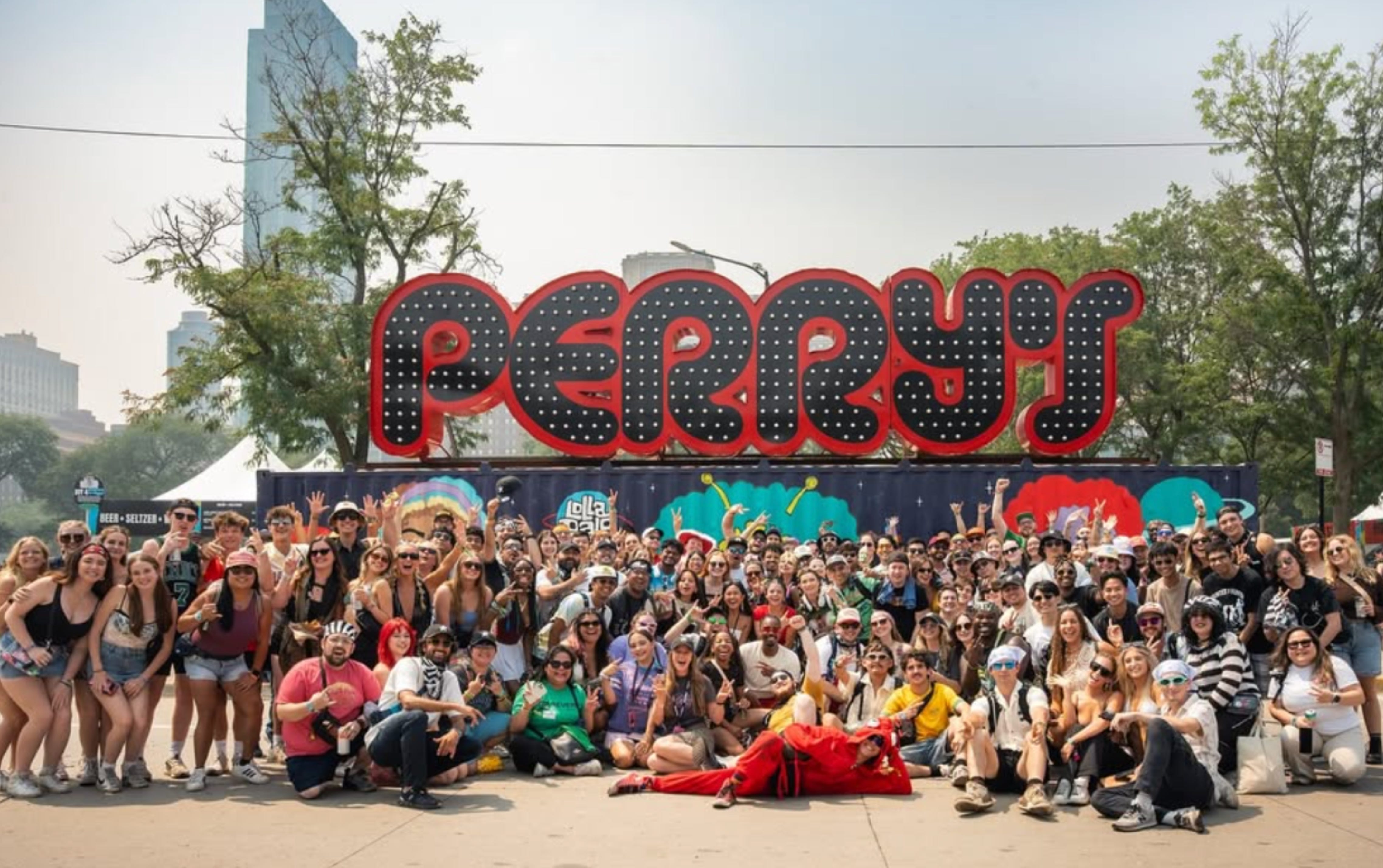
Building a community that feels genuinely fan-run while operating inside a corporate structure like Live Nation required a specific philosophy. McKnight’s approach from day one was to never speak as the brand, showing up as herself instead. “No one wants to talk to a brand,” she says. “They want to talk to a face.”
McKnight brings in festival bookers and marketing managers for “ask me anything” chats, giving fans direct access to the people actually building the experiences they’re paying for. It's a level of transparency the industry rarely offers, and a level of trust that a traditional social media account never could build.
The co-creation piece is where that trust compounds. McKnight doesn’t build channels for the community, instead letting the community tell her what it needs. A member started posting weekly new music Friday lists in the chat; McKnight asked if he wanted his own channel for it. Fans in New York started wanting to organize around local shows between festivals; location-based channels followed.
“This is their home,” McKnight says. “This is where they’re spending hours of their days sometimes. I want everyone to be excited to come in.”
For an industry that has historically treated fans as consumers rather than collaborators, Festiverse represents something different — a platform that was built because fans asked for it, and keeps evolving because they keep asking. It didn't start as a vision for what fan engagement could look like. It started because fans didn't want to stop talking, and someone was paying attention.
The future of fandom is often authored by fans and the industry actually listening to each other. Festiverse is what that looks like in practice.
In the full conversation, Kaitlyn talks more about what makes festival fans their own distinct community, how Festiverse supports first-timers and solo attendees, and what co-creation actually looks like as the platform scales. Read it here.
You can follow Festiverse on Instagram, TikTok, and Discord, or download the app here.
What's Moving Fandom
The moments, decisions, and conversations shaping how fans experience pop culture right now.
Since I last wrote about Phoebe Bridgers' secret comeback tour, the story got more interesting. The pop-up shows were super exciting, taking place in small towns, with fliers posted day-of and tickets just $50. But a small subset of fans started gaming it almost immediately, allegedly following the tour bus between cities and cutting lines, which undermined what she was trying to build for local communities. She addressed it directly, sharing at a show, "These shows are meant for the towns. Don't get me wrong, I love a pilgrimage — but that's not what these shows are about." And now, as she scales, she evolved the system. This week she announced a show at Madison Square Garden, and what's interesting is how deliberately she designed for fairness this time around. The first-come-first-served format had a built-in equity problem, so she switched to a random lottery through Seated, with one registration per person, announced by Phoebe herself on social media so every fan found out at the same time. Tickets start at just $1 with proceeds going to the Community Justice Exchange's Immigration Bond Freedom Fund, and the Yondr pouches are back, keeping the phone-free policy even at 20,000 capacity. What she built in those small towns didn't get left behind when she walked into the world's most famous arena. That's the thing worth studying, not just that she designed something fan-first, but that she protected it when she didn't have to.
Spotify has announced "Reserved," a feature that holds concert tickets for an artist's most dedicated fans before general sale, based on streaming data. It's a genuinely cool but imperfect idea, given that streaming data doesn't always equal the biggest fan, and fans who know how this game works will find ways to game it — leaving your computer running on a playlist overnight is practically a fandom tradition. But the real problem ultimately is scarcity. An artist can have 500,000 fans in one city and only play for 50,000 of them, and every single one of those fans will tell you they deserve a ticket more than anyone else. No algorithm can fully solve that. But better for some fans isn't always better for all fans, yet better for some fans is still better than not being better for any fans. Spotify’s Reserved is a good start, and that’s worth something.
Amazon's Off Campus is the latest in a pattern worth paying attention to — after Stranger Things sent Kate Bush and Prince surging and Heated Rivalry made t.A.T.u. unavoidable, the show is now sending songs from Elton John, Jennifer Lopez, and The Beaches to the top of streaming charts. When this happens, the conversation always centers on the music — which songs are breaking, which artists are getting a second moment. The industry celebrates the catalog resurgence and the sync success. But it’s not as simple as fans hearing a good song. The emotional context of the show is doing most of the work. Beyond discovery, the song is functioning as a portal. It's a fan behavior story that keeps getting lost in the streaming numbers. More on that soon.
More from Fangirl Forward
From the Crowd: Last weekend, I took a trip to Hershey, PA to check out 5 Seconds of Summer's Everyone's a Star! World Tour. The show was a lively extension of the world they built with the project's rollout — back in November, I wrote about the way 5SOS created one of the most fan-collaborative eras they've ever had, satirizing the boyband machine with commentary about industry exploitation, a manufactured rise and fall, and a reclamation of their own narrative.
The tour carried that through to the stage. Fans voted on a deep cut before the show, and another fan stood front and center holding a briefcase that revealed the winning song — because as the band put it, fans are always going to complain about what didn't make the setlist, so they gave fans one song to own. A randomly selected fan walked onstage to present the band with the "Boyband of the Year" trophy. Midway through, they paused for a PowerPoint called "A 5SOS Guide: Becoming a Star in Hershey,” including a map of things they allegedly did before the show. For a band with fans who travel to multiple shows, building localization into the structure rather than swapping out a single scripted line matters.
But something else stood out to me from the crowd. Before the show, I saw a woman walking around handing out hearts. I assumed it was a sort of fan project for during the show, yet it turned out to be something more meaningful. She goes by @coliescicchitano on Instagram, and she’s been making the hearts since last August in honor of her cousin Kenny Rexer — a music teacher, a multi-instrumentalist, someone who loved creating and performing music his whole life. He passed away in March 2025. The hearts are her way of keeping him present. She’s handed out over 250 of them at concerts since then, each one containing a different message, given to fans and staff alike. “A lot of people say it really touched them or they are going through a hard time and that made their day,” she told me. If people post them, she saves the photos and sends them to his mom.“His impact will keep traveling beyond him to people he never met.”
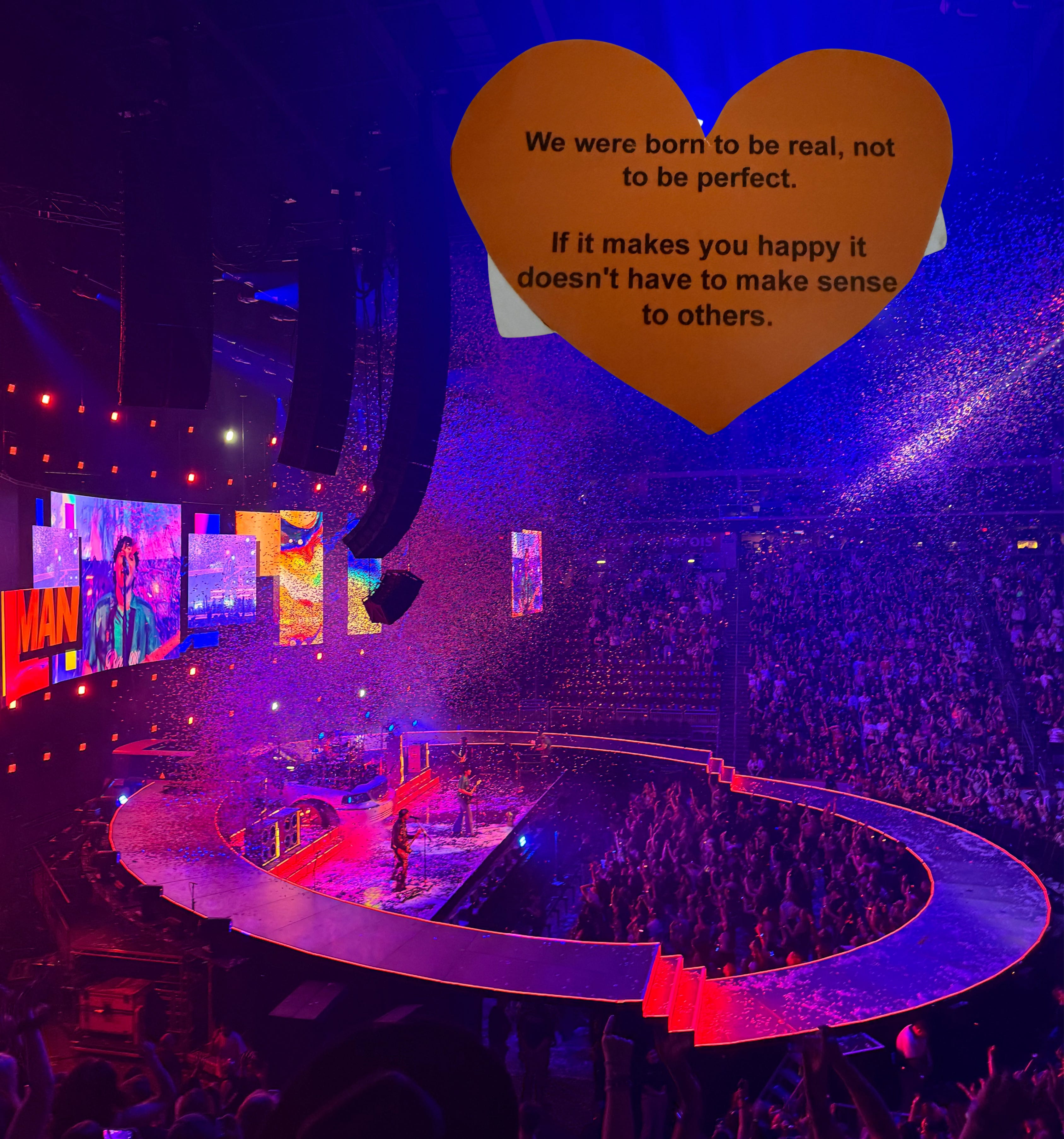
The one she handed me read: “You have received this heart by chance. Music connects people in many ways. High five a stranger, hug your loved ones, make connections, be creative and live life.”
I expected it to have been a message outward to the band, like most fan projects. But instead, it was a message inward to the fans — to the strangers in the room who showed up for the same reason she did. The music is part of why we go to shows. But so is this.
Thanks for reading Fangirl Forward — where we push fandom forward by centering fan perspectives, interrogating the industry that shapes them, connecting fan skills to career pathways, and advocating for more informed, intentional fan communities.
Beyond the newsletter, we publish cultural analysis (Forward Focus), fan-led live event reporting (From the Crowd), fan-first career resources (Credentialed), and industry explainers (FANFAQ).
Want to be part of the conversation?
➡️ Follow @fangirlforwardhq and @fanfavemedia