


Every love story has a beginning. A spark, or a meet cute moment where something goes from casual interest or attraction to full commitment and true love.
This one started with a hockey romance.
When Heated Rivalry premiered in November, it arrived with a built-in audience from a book series by Rachel Reid and a premise that felt almost engineered for obsession. It came with the enemies to lovers trope, a passionate queer love story and…professional male athletes? Mainstream television rarely places a same-sex romance inside the hyper-visible world of men’s professional sports, if ever. With a compelling concept, along with it being a genuinely great, well-paced show, it’s honestly not that surprising how quickly viewers latched on.
By the time the finale aired, the conversation had moved far beyond TikTok edits and conversations online. The fandom only seemed to grow larger and larger, becoming more and more prominent by the week. And then, in a rarer turn for a television series, fans began showing up for it in real life as well.
On Valentine’s Day, it feels fitting to tell this story the way it unfolded, as a relationship. This Forward Focus examines the relationship between a fandom and the thing it chose to love loudly.
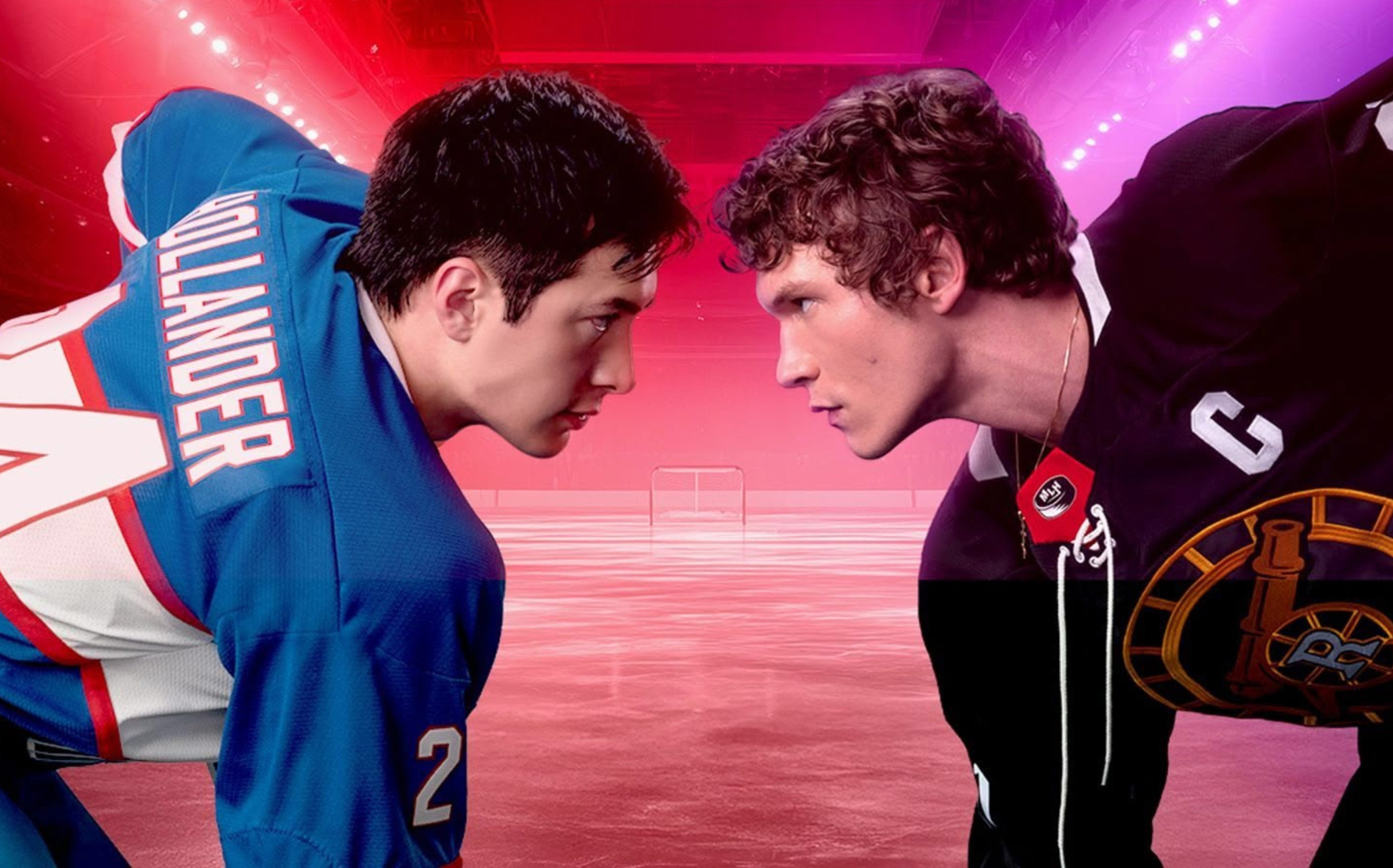
The Meet Cute
Sometimes a meet cute is subtle, and this one kinda was.
Heated Rivalry premiered in late November as an adaptation of Reid’s Game Changers romance novels, which follow several professional hockey players navigating love in one of the most public arenas imaginable. This installment focuses on Shane Hollander and Ilya Rozanov, longtime rivals whose public feud on the ice masks a private, ongoing relationship.
The books, which were known for their emotional depth and sexually explicit intimacy, already had a pretty loyal following of primarily women and queer romance readers. Still, the show did not arrive as a guaranteed event.
The series was developed by Canadian producers Accent Aigu Entertainment and premiered on Bell Media’s Crave before making its way to U.S. audiences.
In Canada, the series’ premiere date was moved up repeatedly as executives recognized what they had. In the United States, HBO Max acquired it only weeks before its debut in a “very reasonable acquisition,” according to HBO’s content chief Casey Bloys, who later admitted he initially assumed it might appeal to a much more narrow audience than it did.
On November 28, it arrived quietly on the streaming platforms of fans. There were no billboards, no months-long teaser campaigns, and no carefully orchestrated press tour — that came later. Just an introduction to the story of two hockey rookies on rival teams who could not seem to stay away from each other. That was the meet cute.
Love at First Sight
It was the kind of love that moves too fast to contain. The show premiered, and the obsession followed almost immediately.
Within weeks, Heated Rivalry had accumulated more than 600 million streaming minutes. In the United States alone, it reached an average of 10.6 million viewers per episode, with the finale audience increasing more than 300% from its premiere week. More than a month after the season ended, viewership continued climbing. Warner Bros. Discovery later confirmed it had become the most-watched scripted title ever acquired by HBO Max.
Fans did what fans do when they fall hard. They ran it back, rewatching the show over and over and created their own terminology for doing so (hello, reheating). They bought the source material. They pulled everyone they knew into it. Hockey diehards (shoutout to The Empty Netters podcast), romance readers, queer Tumblr veterans, BookTok creators, and casual viewers all collectively latched onto this show. It became a shared language between communities that rarely overlap, feeling reminiscent of 2000s fandom, with franchises like Twilight or the Hunger Games taking off.
Colleen, who describes herself as “100% a straight woman” who had never attended a hockey game before, found herself bingeing all five episodes in under 48 hours after a TikTok edit appeared on her For You Page.
“I love the love, and the intimacy of this show,” she said.
“I’ve watched and I’ve re-watched — or reheated as most people say.”
HarperCollins executives cited “stunning sales” of Heated Rivalry on an earnings call as the book series surged alongside the show’s popularity. In the five weeks ending Jan. 10, LGBTQ+ romance sales rose more than 100 percent year over year, with Heated Rivalry leading the growth. Libraries reported waitlists for the book stretching into the hundreds. In San Diego County alone, 783 readers lined up for the digital edition. During a January snowstorm, New York City Mayor Zohran Mamdani urged residents to stay home and read the novel. Over 5,000 downloads followed within hours.
And of course, with the show about hockey, fans became more curious about that world too.
SeatGeek reported a 24% increase in NHL ticket sales during the week of the finale, while StubHub tracked a 40% spike in interest. NHL commissioner Gary Bettman admitted he binge-watched all six episodes in one night. The league later called the show “a phenomenon that is bringing new fans to our great sport.”
Colleen told me she’d never considered going to a hockey game before. But after watching? “Yes.”
Underneath all of it, this was a love story set inside a world that rarely makes room for one.
In Russia, where LGBTQ+ content is banned and homosexuality is illegal, fans still found ways to watch, swapping encrypted links and using VPNs.
For some members of the LGBTQ community, the impact was profound. It was about seeing tenderness exist in a space that had historically denied it. It was about watching two men love each other without tragedy being the moral of the story.
One former hockey player, Jesse Kortuem, publicly came out after the show’s success, crediting Heated Rivalry for helping him find the courage to tell his story. He described seeing something “so positive and loving” emerge from such a traditionally masculine sport as something he never thought he would witness in his lifetime.
Meanwhile, the stars, Connor Storrie and Hudson Williams, went from relative unknowns to cultural fixtures. They appeared at the Golden Globes, walked Milan runways and carried the torch for the 2026 Milan Cortina Winter Olympics. Crowds lined sidewalks outside late-night appearances, as fans waited hours for a glimpse.
At that point, it became clear that things were a bit more serious than the usual hit television series. This was a global fixation.
Making It Official
A relationship is working when both sides are putting in the effort. Heated Rivalry absolutely did its part in being a product that resonated with fans all over the globe. But what made the Hollanov moment different was what the fans did next.
The enthusiasm moved outward, into podcasts, dance floors, city parks and professional pipelines. Fandom has always been creative. Edits, fanfiction, podcasts, events, memes — those ecosystems exist around nearly every beloved show. But with Heated Rivalry, the scale and speed felt intense. What also felt unique here was how many people wanted to participate, even causals outside of the more niche fandom communities, and how visible that participation became.
One of the clearest examples of that expansion came in the form of a fan-made podcast.
The Believe in Anything Podcast was created by fans who wanted to talk not just about the show, but about what it was doing to people. Instead of recapping episodes or debating plot twists, the hosts chose to center conversations with other fans about impact, lived experience and why this particular story hit the way it did.
“There wasn’t one specific moment,” co-host Emily Potashnick said. “There are so many great podcasts about the show already, but my co-hosts and I could not stop thinking about it. In the same way other fans were inspired to create art or write fanfic, we wanted to create something too. For us, that meant building a space where we could channel all that passionate energy into conversations with other fans. What’s better than talking about your favorite show and series with people who love it just as much as you do?”
After the premiere, she noticed people trying to explain the scale of the reaction in real time.
“There were a lot of big questions floating around about why it resonated so widely and why it blew up the way it did,” Potashnick said. “But instead of guessing or theorizing, we kept thinking, why not just ask the fans?”
“We wanted to hear directly from people about how it personally impacted them. Especially the people who felt inspired or changed after watching it. Those personal stories are what really interest us, and highlight the importance of this show right now.”
For one fan, fandom became a resume boost.
A fan editor who posts under the name Mellie had already been active in fandom spaces for years, but Heated Rivalry hit differently. She had read the books first and already had songs picked out in her head before the series even premiered.
“I read the books and absolutely fell in love with them,” she said. “I had an idea as to which songs I wanted to edit before the show came out, but I got countless new ideas as the show itself aired. Shane and Ilya in particular are a really fun couple to edit because they’re so complex, their story is so unique, and the message is so important. I’ve made so much of my proudest work with this show.”
One edit in particular changed everything.
“I had some edits do really well before that one, but my ‘Sweet Dreams’ edit in particular really took off,” she said. “I’ve never had an edit do that well before, and I was completely taken aback by the response to it. People were so incredibly kind and excited about that edit.”
“It was so rewarding to see and really validating as someone trying to make it in the industry.”
Not long after, she accepted a job at HBO as an editor making trailers and promos.
“It was absolutely surreal,” she said. “This was a hobby of mine for so long, but it had also been a dream of mine for years to work in this industry. I never expected to get discovered through social media. It very very full-circle to get discovered through the place I grew up and found my start. I’ve been part of fan spaces since I was 12, and I turn 26 soon. I’ve absolutely loved my time in fan spaces and I will forever be so grateful for what it’s done for me.”
The fandom also moved off screens and into rooms.
Across the country, Club 90s began hosting Heated Rivalry nights in venues holding hundreds, sometimes thousands, of fans. The tour even made stops in Canada and the U.K.
Mikey Luján, a DJ for Club 90s, said this one felt different from the start.
“What felt immediately different about the Heated Rivalry Rave was that it’s an event I hosted around a show that was blowing up in real time,” he said. “A lot of the events I hosted that sold out in the past are based around nostalgia, like 2000s Night or Disney Channel Nights with Bop To The Top Tour. Those are both so fun, but it’s cool to be apart of a cultural moment that’s defining the current decade we’re living in.”
On tour stops across the country, the show stopped being something people watched alone in their bedrooms and became something energetic and community-centered.
“From behind the booth, the crowd energy is insane! I think what really leaves a lasting impression on me is the genuine smiles. Not only is everyone showing their joy through dancing, but they’re also making it clear on their faces which is really fulfilling to see.”
Music was always part of the show’s emotional language, so it made sense that it would become the bridge between screen and dance floor.
Songs like t.A.T.u.’s “All the Things She Said” and Wolf Parade’s “I’ll Believe in Anything” saw renewed popularity as fans associated them with pivotal moments, like a messy club scene and a long-awaited kiss on the ice. At club nights, it can feel like stepping directly into the world on the screen. Fans anticipate hearing the songs so they can scream the lyrics back at each other, recreating or revisiting the moments from the show in real time.
“The moments that get the biggest reactions from the crowd are the very pivotal moments in the show, like the shower scene with Shane and Ilya, as well as the kissing scene on the rink between Scott and Kip,” he said.
“What the reaction from these two scenes tells me is that people are coming to these events not only because they are physically attracted to these characters, but also emotionally invested in their stories and the breakthroughs they make in their sexual identities.”
He also noticed who was showing up.
“Something I’ve noticed about the fans in the room is that it’s people from all different walks of life. Even though Heated Rivalry is a gay love story, I’ve seen straight men, lesbian women and everyone else in between come to these events. Everyone is super supportive of each other when people are dancing on stage, and I think it goes to show that even if you can’t relate to a show, as long as it has a good story, that’s all that matters at the end of the day to keep people interested.”
If fandom had once been confined to screens, these nights made it impossible to ignore.
For some, the appeal was more casual. Violet, a college lacrosse player who attended one of the Club 90s tour stops, hadn’t even been the one to discover the show first — her roommate had. But the two showed up early, waiting in freezing weather to grab a good spot inside. When she found herself onstage after screaming for a chance to participate, it felt like “a nice little side quest. Better than rotting in bed.”
“It seems to be a nice space for them to express themselves in whatever that context means to them,” another fan, Kennedy, said. “And I love the club nights. It gets people outside. It gets people to do something surrounded by something that they like.”
Offline gatherings extended beyond dance floors.
On February 1, hundreds gathered in Greenwich Village for a Heated Rivalry lookalike contest organized by Katherine Gehring and Charlotte Steinblatt, with nearly 5,000 RSVPs. The crowd was so large that police shut down the original Washington Square Park location, forcing a relocation to Mercer Playground in 20-degree weather.
Contestants arrived in hockey jerseys, reenacted scenes and leaned fully into the theatrics as the crowd chanted for their Shanes and Ilyas to kiss.
For Steinblatt, the experience felt familiar in an unexpected way.
“I love live music, and attend many concerts, and it was similar to that feeling — so many people showing up to experience something meaningful to them with strangers,” she said. “It was jarring and so beautiful. It made me want to keep creating moments that bring people together en masse.”
Despite the crowd size and freezing temperatures, what she remembers most isn’t the chaos — it’s how kind everyone was.
“I was impressed by how kind and cooperative everyone was, even at the most hectic moments,” she said. “It made me emotional how many people genuinely wanted the event to go smoothly and wanted everyone around them to simply have fun.”
“I think what the show brought to people and proved people are craving is very simple: Safe, joyous spaces celebrating love of all kinds. That’s what I hope Sunday brought to everyone.”
The show had done its part. Now the fans were doing theirs.
It’s Complicated
But it wasn’t all sunshine and rainbows. Every relationship has its…not so great moments, and fandom is no exception.
As Heated Rivalry grew, so did the intensity around it. For many fans, the closeness of the show — the intimacy, the vulnerability, the feeling of being let in on something private — translated into a sense of personal attachment to the actors themselves.
The show’s sexual content fueled an extreme level of online sexualization of the two male leads. That reaction was kind of unsurprising given the tone of the series and the intensity of the fandom. Less expected was how quickly speculation about their real lives took hold, with fans debating who they were dating, whether they might secretly be together, and who was worthy of them in the first place.
Both Connor Storrie and Hudson Williams have remained visible in the press while keeping their personal lives largely private. That boundary did not stop some fans from trying to cross it. People posted TikTok videos filled with theories, dissecting everything from Letterboxd accounts to airport photos. A kind of “protect him” entitlement surfaced, as if the actors were fictional extensions of the characters they played.
When both were announced as new clients of CAA, one of Hollywood’s most powerful agencies that has represented big name celebrities for over 50 years, fans flooded the agency’s posts urging them not to “mess up his career.” It was protective in wanting to see success for the actors they admired, yes. It was also telling.
The boundary crossing did not stop with the cast. As interest in hockey surged, some fans brought the fictional dynamic into real arenas. At games, a handful of attendees held sexually suggestive signs directed at real-life players or shouted for them to kiss, projecting a storyline onto athletes who had never signed up to participate in it. On social media, some began referring to live games as the “boy aquarium,” a tongue-in-cheek label that framed professional athletes as objects of visual consumption.
Actor François Arnaud, who plays Scott Hunter, addressed the darker side more directly. In an interview with the Toronto Star, he revealed he had received death threats amid online rumors about his relationship with Storrie. He noted that while most viewers had been positive and respectful, some appeared unable to separate fiction from reality. “I honestly wish they would just rewatch the show,” he said. “It doesn’t seem like they got its message. Pay attention more closely. Did we watch the same show?”
The irony is hard to miss. Heated Rivalry is built on the idea that love should exist without shame, fear or ownership. But some of the backlash and speculation replicated the very pressures the show critiques.
Part of what seems to be fueling this dynamic is the way the series centers its queer romance fully. Shane and Ilya’s relationship is the story, with their fear of exposure and their secrecy, all vulnerability played out on screen for us. The emotional stakes are intimate, and intimacy can create the illusion of proximity.
Then, add in the “overnight” stardom narrative, where two relatively unknown actors were suddenly thrust into global attention. That kind of trajectory can feel like something fans discovered first, and it can produce a subtle “one of us” attachment — because, just a few months ago, they were still living very normal lives like us. Videos have surfaced of Williams working as a waiter at a pasta restaurant, his life changing overnight.
Love can blur lines, but it should never erase them.
Still, its important to say the overwhelming majority of the fandom has been joyful, supportive, and pretty respectful. The complications existed alongside the celebration, not in place of it.
Every love story has tension. The question is what survives it. The negative aspects of the Heated Rivalry fandom cannot fully outweigh the good when you zoom out and look at what it created.
When Love Feels Rare
A queer hockey romance, adapted from a series of novels that many people outside of romance spaces had never heard of, becoming one of the biggest cultural moments of the winter was not something anyone predicted. It wasn’t backed by a billion-dollar franchise, it didn’t have any A-list actors in the cast, and it wasn’t designed or marketed to dominate awards season alongside “prestige” tv shows. It arrived quietly, and then refused to leave.
Part of what made it resonate so deeply is that stories like this are still rare. Mainstream sports narratives have long centered toughness and hypermasculinity. Heated Rivalry placed tenderness at the center instead. It treated a same-sex relationship as the entire emotional engine of the story, rather than a subplot.
Showrunner Jacob Tierney has also noted that the genre’s appeal for many straight women lies partly in its ability to sidestep the gendered power dynamics that often shape heterosexual romances. Two men on equal footing, negotiating desire, vulnerability and fear without the traditional scripts of male dominance or female submission creates tension.
The way fans responded to the show felt rare, too. These days there seems to be no more monoculture, as everyone has their own algorithms and their own niches, and you can truly exist in your own silos. But sometimes things break through, and there’s this feeling of communal obsession that is just inescapable. I think a lot of people are craving more of that.
Not every show becomes a movement. Not every fandom spills past the screen and into libraries, nightclubs, hockey arenas and city parks.
Heated Rivalry gave fans a story worth falling for, and what they built in return was proof that the feeling was mutual. As we wait for season 2, it’s clear this was never going to be a fling. It feels much more like a relationship, and this love story is only getting started.
Forward Focus is Fangirl Forward’s analysis vertical, featuring longform essays, interviews, and cultural reporting that examine how audiences shape entertainment—and how entertainment shapes us.