


One of the clearest ways fans show love for the artists they care about is by making something of their own. From edits and fan fiction to custom merch, fandom has always been a space where creativity thrives. But when those creations clash with copyright and licensing rules, things can get complicated.
For years, fan-made merch has existed in a cultural gray area — celebrated within fan communities while raising questions about intellectual property, artist control, and how creators should be compensated.
Platforms like Softside are now exploring what it looks like when fan creativity is officially brought inside the system.
Founded by former touring and A&R professional Erin Singleton, Softside is a creator platform that enables fans to collaborate directly with music artists on officially licensed merchandise. Working with artists including Geese, Black Country, New Road, and August Ponthier, the platform supports the full process, including design collaboration, licensing approvals, production, fulfillment, e-commerce management, and revenue sharing.
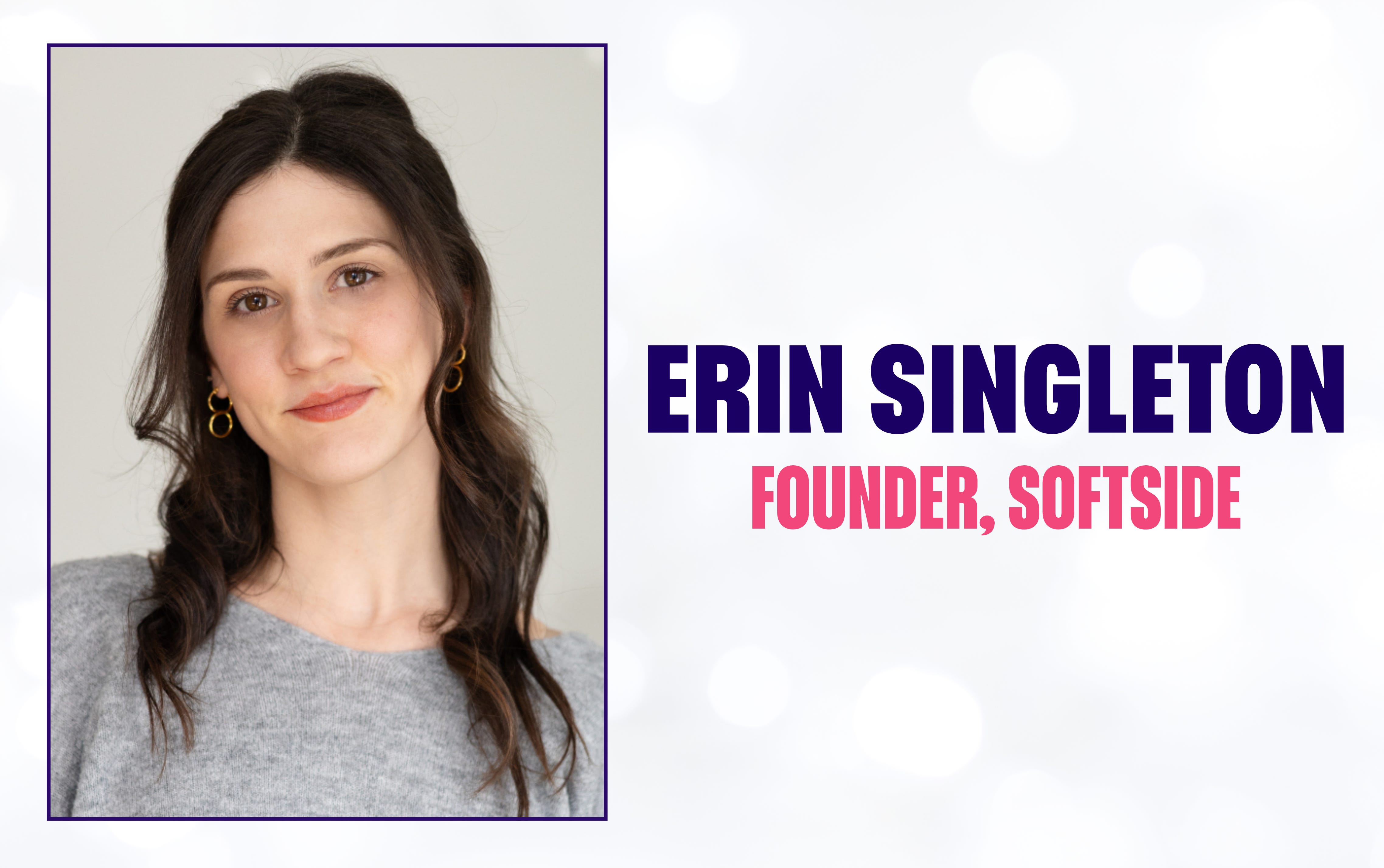
Below, Erin reflects on building business models rooted in fandom, how fan creativity is reshaping traditional merch pipelines, and how co-creation may define the next phase of audience engagement in music.
For anyone new to your work, how would you describe Softside and what you’re building?
Softside is a creator platform for licensed, fan-designed merch. Everything we do is fan-designed and artist approved. Artists work with their fans on merchandise, and then we take care of all of the logistics on the back end. We handle the production, fulfillment, licensing, revenue sharing, and the overall co-creation process.
When you were digging into fan art and merch during the pandemic, what was the moment you realized this wasn’t just a messy gray area — but an ongoing problem in the industry that needed a real solution?
I think it was when I started seeing our own clients’ work. It's one thing to notice it as an outsider fan who just likes fan art in general. But once I actually started seeing fan art and fan merch directly related to some of the artists that I was working with at the talent agency, it was really an eye opener.
We were working on the live tours of maybe 75+ artists, and I was seeing their fans on TikTok, Etsy, and other social media marketplaces making merch for them — especially with the rise of print-on-demand technology. That was the moment I realized there was so much out there directly impacting my clients’ IP and their merch businesses.
And once you start digging and go down that rabbit hole, the floodgates open. You realize how much this impacts other artists as well.
You started as a fan, then worked inside touring and talent agencies, and now you’re building Softside. Looking back, what do you think fans actually understand better about the industry than people give them credit for?
I think fans are just way deeper in the weeds. There’s obviously a lot of really great technologies and platforms out there now that are trying to go deeper and understand things at a more incremental level. But fans are already there. They’re in the different subchannels and Discords and Reddit threads, talking to each other. They have their own inside jokes and their own fan theories about new music hints. They’re living that community rather than observing it.
So for those reasons, I think they understand — beyond merch — the types of experiences and fan-to-fan and fan-to-artist relationships they want to be having, or are already having but maybe aren’t being noticed enough. There’s a lot to learn from fans because they’re doing what they do best. They’re listening, hanging out together, and building community in a very organic sense.
Having spent so much time in fandom spaces, what did you want to make sure wasn’t lost when you turned that experience into a business?
I think it was trying to meet fans where they already were in terms of how they create. For example, when I was first figuring out what Softside would look like — and it was a very rudimentary platform on Shopify with no real tech behind it — something I was reading a lot and hearing from fans was that they already had these beautiful works and portfolios ready for potential collaboration.
Not every fan wants to participate in a design contest, because that requires creating something from scratch. That can take hours or even days, and then it might not get selected.
So to meet fans where they already were, we recognized that they had already created really beautiful work, and that should be enough to be considered for collaboration with music artists. If they’re approved, they can then start creating something in a similar style to their portfolio but aligned with the specific project the artist has coming up.
That was really important to us early on — making sure fans felt respected in the creative process, because they’re creatives in addition to being fans.
Softside might sound like an open marketplace from the outside, but in practice it’s clearly curated and structured. How did you think about designing a system that allows fans to participate meaningfully — while still respecting IP, artist control, and why not everything can be approved?
I think when you’re trying to build any two-sided marketplace, you need to think about what factors are most important to those two parties. For fans, it was having collaboration options — either being able to submit a portfolio or create original ideas if they do have original designs ready.
For music artists, it was about being able to control what designs are actually going out, because it’s a reflection of their name, likeness, and their business. They didn’t want anything listed in a free-for-all marketplace. They want to be able to curate themselves.
This is a system that works for us right now, but we do see a lot of potential in that evolving — whether fan attitudes shift or music artists become more open to having anything go, as long as the content is appropriate.
There are different ways I can see this developing as our technology improves and as more people adopt the system and understand what it’s about.
What’s been the biggest lesson from building Softside so far?
I think fans are capable of way more than some music artists might initially expect. It’s not that artists look down on their fans or don’t have confidence in them. It’s just such a new way of creating merch designs that sometimes artists go into it pretty blind, not knowing what’s actually going to come out of the process.
As a result, we’ve moved forward with some designs that look very different from the merch they’ve done in the past. It might be a hand-drawn or hand-painted illustration that looks totally different from a more cookie-cutter design or simple logo they’ve used before.
The biggest lesson has really been to trust that process. We’ve seen some of the most experimental designs receive the most positive reactions from fans, and sales have been strong. It’s about trusting the different creative visions people bring. It can really surprise you.
What do you hope changes about how the industry works with fans over the next few years?
I think just fairness in general. We try really hard to find every possible angle to make a collaboration feel like a true, fair partnership between both the music artists and the creator. For example, we have a royalty system where fans participate in the royalties of each sale.
Some music artists have also paid flat fees on top of that, but at a minimum, we try really hard to make sure that’s maintained in every partnership, with a few exceptions. My goal would be for that to become more of a norm. I think music artists are perhaps more used to just paying a $500 flat fee to a fan. They take the design on the road and can see thousands of units sold without any royalty participation for the designer.
So I think that basic level of fairness will ultimately create a more positive, creative collaboration process for both the music artists and the fan.
For fans who want to turn their passion into something real — whether that’s a business or a career — what’s one thing you wish you’d understood earlier?
I think a lot of the concept of the word Softside came from inviting fans to tap into their soft side — their vulnerable side. Creating art in general is a very personal experience, and some people are not used to putting it out there, let alone maybe having it transform into merchandise. I think it’s a new process for both fans and music artists.
So my advice would be to be more comfortable with discomfort when putting yourself out there, because you never know who’s watching. Doing something even if it doesn’t get likes or sales — setting a personal challenge to post new fan art every day on Instagram, even without a following. However that looks for you, even beyond fan art, I think challenging yourself to do something a little uncomfortable and being confident about it is really important for growing your skills, networking, and finding your audience.
What are you a fan of right now? Any campaigns, shows, moments, or trends that have been living in your head lately?
In terms of music, I’ve been listening to Not for Radio’s new album a lot. It’s a solo project from Maria of The Marías, and the album is beautiful. I’ve been loving it. I’ve also been listening to one of our new artist partners, Racing Mount Pleasant. They opened for Geese this past fall, and I’ve been listening to their album a ton lately. I think it’s awesome and really well done.
In terms of TV, I don’t watch a ton. Lately I’ve been getting into longer documentaries. I like shows that feel contained, like a docuseries with a clear timeline that I can watch and move on from. If something has too many seasons, I probably won’t stick with it.