


Fandom has long been framed as a space of belonging, and particularly, a place where fans can connect, create, and feel seen through the artists and communities they love. But for some, especially disabled fans, that sense of inclusion doesn’t always extend beyond the surface.
Despite growing conversations around accessibility, much of the music industry still operates at the level of compliance rather than experience, meeting basic requirements without fully considering what it actually means for fans to participate in real time.
Carly Webster has been working to change that — both as a fan and as an emerging professional across the music industry, with experience spanning organizations like HeadCount and Wasserman Music.
At 15, she founded Disabled Music Fans Collective after noticing a lack of representation for disabled fans across music spaces. What began as a fan-led effort has since evolved into advocacy work, alongside her growing experience across the music industry and live events.
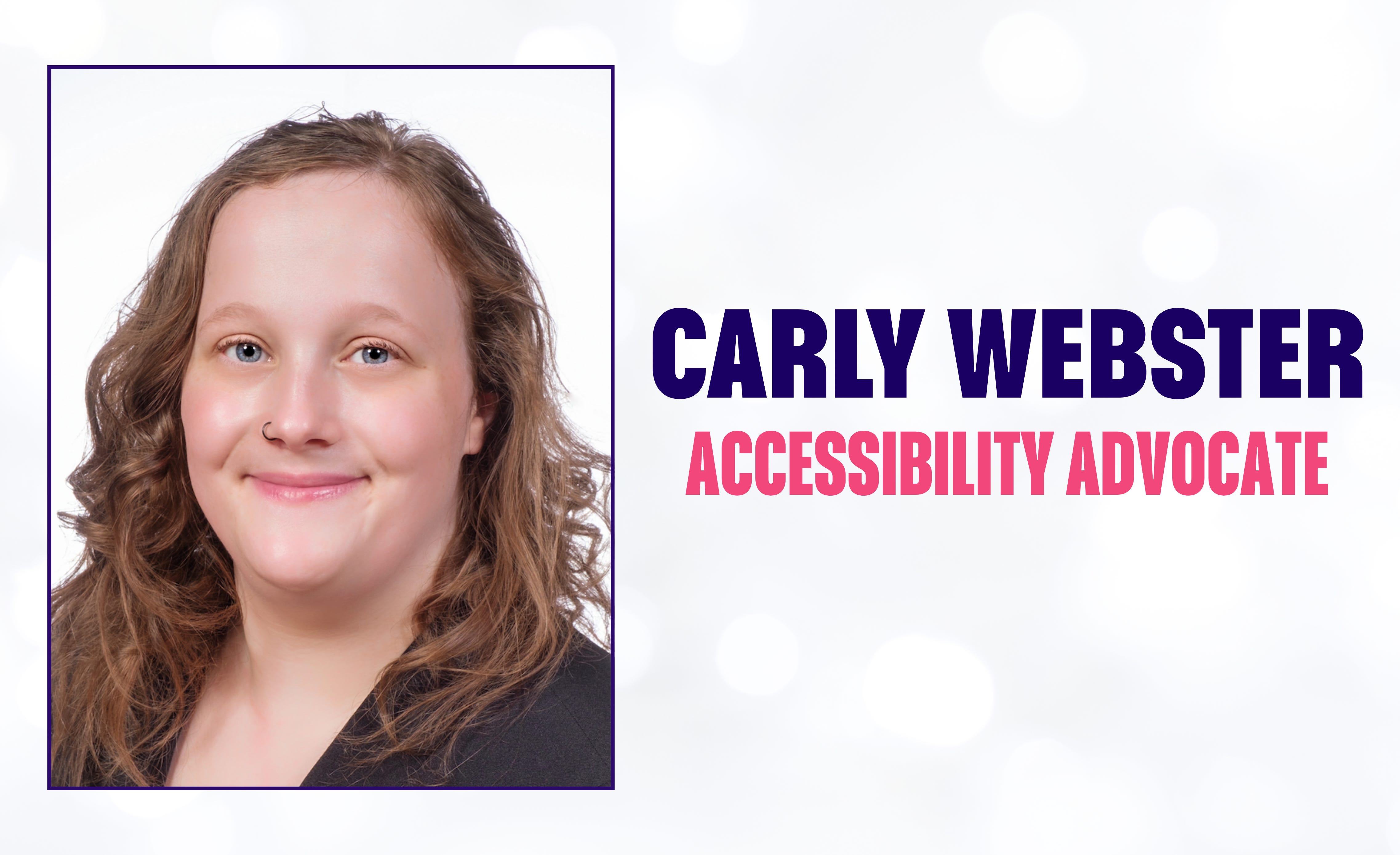
Below, Carly reflects on where the industry is making progress, where it continues to fall short, and how fans themselves can play a role in building more accessible, intentional communities.
You started Disabled Music Fans Collective when you were just 15. What were you noticing in fandom spaces at that time that others seemed to overlook, and what made you decide to actually build something instead of just talk about it?
At that time, I would say it was the peak of my fandom activity, and I was noticing a lot of fan projects and initiatives popping up for LGBTQ+ fans, fans of the global majority and things like that. I thought that was great, but when I really dug in, I didn’t see anything for disabled fans.
My mindset was, yes, we have some regulations that make venues more accessible — but what about fans who, for medical, geographical, or financial reasons, might never be able to make it to a gig?
Especially after the pandemic, there was a bigger opportunity for artists to engage with fans in ways that were not only virtual, but actually accessible. And we’re still seeing artists miss the mark in terms of not using captions on videos, not including image descriptions, and now that we're out of COVID restrictions in a lot of places, we of course no longer really have virtual concerts.
So I kept coming back to the idea that we need more representation and a spotlight on this. I had spoken up about it before, but I realized we needed a bigger foundation behind it. I started doing more unofficial fan initiatives, and then once I graduated high school and started doing stuff in the industry, I saw that while people would support the idea, there wasn’t a real path for action or funding unless we had the nonprofit status, so that’s what I did in 2024.
It’s kind of been hard to play that role as a college student as well, but at least I overcame that hurdle, and post-grad I want to put more time and energy into it, because it is something the industry is still really missing.
At what point did you realize it wasn’t just a fan project, and what did that moment teach you about what fans are capable of building?
I think one of the biggest turning points for me was doing a TED Talk in 2023 about fandom. The mentors and folks helping me prepare it really encouraged me to explain everything in very simple, ‘non-fan’ terms — no jargon, because nobody was going to understand it.
That experience gave me a chance to talk about fandom in a way that wasn’t immediately dismissed. Growing up, I talked about it all the time and wore merch and was always kind of the butt of the joke, because female fans aren’t taken seriously. So being able to say, ‘Hey, this is more than just people tweeting all day, we’re literally able to do so much,” I think I really appreciated that. We're not just hysterics here, we're we're trying to do something.
Especially during the pandemic, we saw that even more clearly. Fans were coming together to raise money, share resources, and support each other in real ways. It showed me that fandom has real power and impact.
Since I’ve graduated high school and done stuff in the industry, I’ve reconnected with a lot of the people that I was in those fan communities with, and there’s more of us trying to do this industry stuff than I ever could have imagined. Now years later, I really root for those peers so much because I know they're trying to accomplish similar things and make sure that fandom stays alive. And that's really all I could ask for.
Fan spaces — both online and offline — often describe themselves as inclusive, and venues often meet the legal minimum. But from your experience, what’s the gap between good intention and actually creating spaces that feel accessible?
I think, and a lot of disabled folks might echo this, spaces are focused on checking boxes rather than humanizing the experience.
It’s very much like, okay, we have to meet these requirements — doorways have to be a certain size, things like that — and that’s all good and great if we can get in the place. But what is the experience we’re walking away with once we’re done with the show?
I had an experience recently where I was attending a show. I hadn’t been to this venue in years and had always had a really great experience. This time, I decided to request the ADA platform because I wasn’t really feeling the pit.
It’s a completely flat platform, slightly raised above the crowd, with chairs. A staff member told me to sit down because I was blocking people behind me, even though no one had actually said anything. After the staff member left, I asked the people behind me if everything was okay, and they said I was fine.
But I was still told that if I wanted to stand, I needed to go to the back, and in a sold-out show, there really wasn’t anywhere to go. That left a sour taste, because it’s one thing to adjust things so everyone can have a good experience, and another to tell a disabled person what they should or shouldn’t do with their body.
And that’s just one experience — most of mine have been really good. But when we focus on checking boxes instead of looking at the guest as a whole person, we miss a lot. Disabled fans are putting in time, money, and energy to be there — sometimes bringing additional support with them — and that’s not going to be one-size-fits-all.
I also saw a different approach when I worked a festival this past summer with an accessibility team that focused on finding the best possible solution in the moment. They emphasized things like harm reduction and being sensory-friendly, and actually having conversations with people instead of shutting things down.
So it’s less about checking boxes and more about asking, what can we do as a team, as a staff, as a community, to make this the best possible experience for everyone?
From what you’ve seen, where is the industry genuinely improving when it comes to accessibility, and where is there still work to be done?
I think the industry is doing really well at recognizing the philanthropic and social impact side of things, whether that’s through tours, merch campaigns, or other initiatives. I love that there’s more of that happening.
But at the same time, we’re kind of missing the point, we’re missing the human experience. I love working with social impact partnerships where I can, but there’s still so much to be done in understanding that accessibility is more than just boxes to check. It has to be a holistic commitment and support for people who are giving their time, money, and energy to these artists.
I would say there’s always a dynamic where bigger companies are going to have a more resources to put into accessibility than a really small venue, and that’s totally understandable. I try to hold space for that.
But there’s a difference between using the resources you have to do the best you can in that moment and just completely not doing anything. And I’m not saying that’s the case for every venue, but when larger companies oversee a lot of venues, it can end up being applied inconsistently — which is something I think is trying to be worked on more.
Advocacy often means educating people repeatedly. What has building and sustaining this work required from you, and how have you learned to protect your energy in the process?
It’s still something that I’m working on, especially as a young professional and someone early in my career. I’ve had to learn to kind of toe the line between, like, okay — can I tell them the cold, hard facts they’re going to understand, or am I bringing too much emotion into it?
And I never want to police how people react, but sometimes I’m like, girl… you should not be yelling and screaming. Not that I’ve done that, but I’ve definitely sent emails where I felt like I came across a little harsh. But at the same time, I’m constantly having to educate people and say the same things, and it’s very tiring.
It requires — and I hate to say it — bureaucracy. Working with red tape is sometimes just part of it. But I’ve also learned how to request meetings and have conversations that don’t feel one-sided.
And a big part of it is picking and choosing my battles. There have been opportunities that were completely inaccessible to me — like not being able to relocate for an internship because of accessible housing, or not knowing if a workspace would actually meet my needs.
There’s also this general rule is to not disclose until you have an offer, but if you disclose after accepting and it doesn’t work out, you’ve kind of lost the chance either way. So it becomes personal advocacy too.
And sometimes, it’s just not worth it. I’ve had several situations where I bring up the same issues to the same people and nothing changes year to year. At that point, I’m like — you know what, not my problem. I’m doing my part by educating and putting in emotional labor that I shouldn’t have to, and what they do with that is up to them.
So especially post-grad, I’m trying to focus on what feels good and protect my mental health, because if I don’t, I can’t keep doing this work. And no one else can be me for me.
I never want to represent the entire disability community, but I also know there are very few people doing this kind of work in the fan space. There are organizations on the artist and industry side, but where is the support for people in the audience So it’s a balance. Sometimes I’m afraid to speak out, and sometimes I’m mad at myself if I don’t. But I’ve had to internalize that if someone responds poorly to a genuine issue, that’s probably not a space I want to be in.
I want to be somewhere that recognizes my work while also supporting what I need to succeed.
For fans who care about accessibility but don’t know where to start, what’s a small but meaningful action they can take?
I would say really follow and pay attention to disabled creators and disabled fans. Even if they’re not talking about concert-specific things every day, there’s still so much to learn from their lived experiences.
Also I think a great way to educate yourself is to look at accessibility standards — not only digitally, but also in your local community. If you live somewhere like Atlanta, look at venues there and see if they meet basic requirements. When you go to a show, go with a friend and kind of audit it — take a look at things, write down what you notice, text a friend. Just keep an eye on things.
You don’t necessarily have to do what I do and call everything out, but that sharing of information is such a key part of fandom, and we should use that to our advantage in holding venues and the industry accountable.
Because there are always going to be younger fans coming up who are still engaging with fandom, and I don’t want them to feel unseen or excluded because things aren’t accessible.
We’ve had so much time, and accessibility was never meant to be the ceiling. As fans, we really have to take charge of that — because we deserve better for our time, our money, and our energy, and we contribute so much to this industry.
What are you a fan of right now?
I’m really loving the revival of certain styles of music and seeing artists come back in new ways. Like, Hilary Duff is about to go on tour — I wasn’t really old enough to grow up with her music, but I’m like, okay, cool. Good for the millennials.
And then Zayn going on his solo tour. One of my first fandoms was One Direction, so seeing him get to a place where he can say, like, ‘I’m ready to do this,’ that takes a lot of guts. Especially considering everything he’s been through. I’m very proud to see him doing that, and I can only wish him nothing but the best.
I also really love seeing artists speak up about things they care about, especially right now. I started a playlist called ‘Revolution’ because a lot of recent songs feel like they’re about holding people accountable and pushing for a better world.
This interview has been lightly edited for clarity and length. Connect with Carly here.